Key Points
- Rear bike racks really do make you a better mountain biker. They increase your cargo capacity, allowing you to go even farther and simplifying multi-day bikepacking adventures with all the necessary kit.
- With a rear rack, it greatly improves the experience of carrying heavier backpacks. Ideal for longer rides, its front/rear balance evenly distributes weight for better control and reduced fatigue.
- These racks provide the flexibility you need to tackle any riding you do. They’re equally at home on the daily commute or that weekend tour, quickly adjusting to carrying whatever the cargo—big or small.
- When choosing a rear bike rack, consider the mounting style that will work best for your bike style and riding needs. Unlike generic brands, this will guarantee compatibility and allow for a straightforward installation.
- Regular maintenance, including inspections for damage and proper cleaning, is essential for ensuring the longevity and safety of your rear bike rack.
- Tie your gear down properly! Learn to ride differently considering the extra weight for a smoother and safer ride.
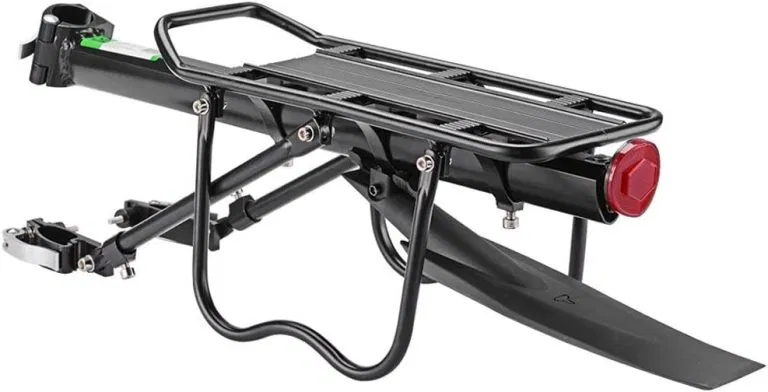
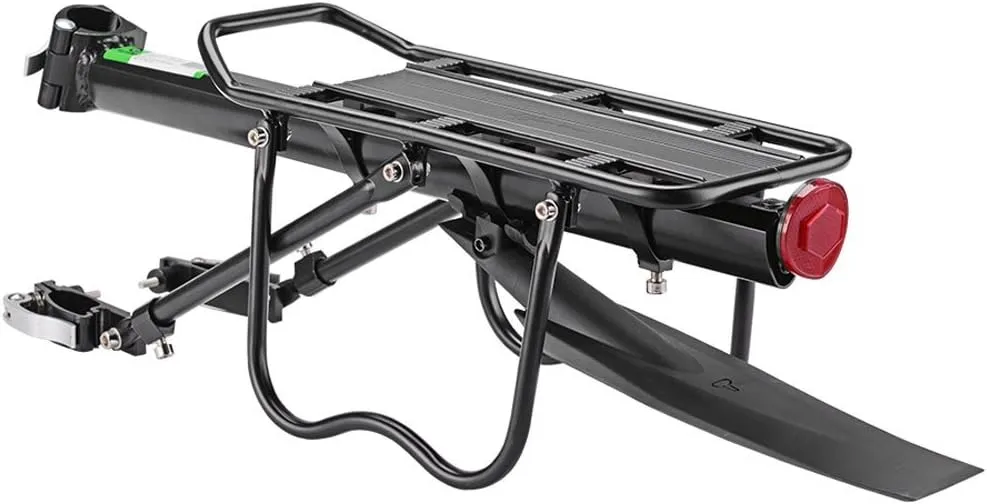
- High Quality Aluminum Alloy: ROCKBROS bike cargo rack is made of high strength aluminum alloy with stainless steel screws, balancing strength and weight for everyday riding. Designed for commuting, touring, grocery runs, and carrying camping gear. The rear bike rack supports up to 55 lb capacity when properly installed and performs reliably in various weather conditions.
- Easy to Install & Remove: Equipped with adjustable quick-release clamps, allowing fast installation and easy removal when not in use. Comes with installation instructions, wrench tools, and step-by-step video guidance, making setup simple even for first-time users.
- Universal Cargo Rack: Compatible with most mountain bikes, designed for round seat tube diameters under 1.26in (3.2cm). The rack features adjustable height and angle settings to help achieve a proper fit on different bike frames.⚠️Not suitable for soft-tail bikes, carbon fiber bikes, folding bikes, small-wheel bicycles, or rear suspension bikes.
- Stable & Adjustable Support: Three-point fixation provides improved stability during riding. Adjustable support rods allow length, height, and angle adjustments to match your bike frame. Compatible with various pannier systems and suitable for carrying a backpack, panniers, or other rack bags for daily commuting and touring.
- Side Protection & Riding Safety: Dual“W”-shaped side rails help keep panniers and bags away from the wheel and spokes. Includes elastic cords to secure cargo and a rear red reflective lamp to enhance visibility, offering added safety for low-light riding conditions.
Last update on 2026-03-08 / Affiliate links / Images from Amazon Product Advertising API
This guide will help you pick the best rear bike rack for your mountain bike. It provides secure storage for your gear and equipment, allowing you to enjoy endless comfortable rides.
A reliable mountain bike rack lets you roll heavy-duty with confidence.
It also simplifies the process of attaching bags or baskets, making it ideal for long rides or bikepacking adventures.
Knowing the different styles and features allows you to choose the right rack for your needs.
Find mounts explicitly made for mountain biking!
These chassis offer outstanding toughness and stability with various frame sizes and load capacities.
This guide will walk you through the essential factors to consider, ensuring you select a rack that suits your biking needs and lifestyle.
Why Use a Rear Bike Rack?
A rear bike rack makes your mountain biking experience exponentially better with practical solutions for carrying audio and gear.
With the load-carrying capabilities of 40- and 60-pound loads, you can expand your loads easily.
All that extra space allows you to take longer rides.
Now, you can tote some serious supplies, such as tools, food, or extra clothing, for those unexpected weather changes.
When going out bikepacking, the rear rack is an absolute must.
It hauls your camping gear and other essentials, so you’re prepared for whatever adventure comes your way.
1. Expand Mountain Biking Capabilities
A rear bike rack changes the way you bike. It allows you to haul more gear without the discomfort of a heavy pack on your back.
By ensuring the weight of your cargo is spread evenly throughout the bike, you increase stability, making the ride even more pleasant.
Built-in convenience means you’ll have quick access to your gear without needing to stop and rummage through your backpack. This ease of use greatly streamlines longer rides.
2. Carry Gear, Not on Your Back
Preventing lugging around a weighty pack when biking allows you to focus on the route in front of you.
A properly installed rear rack prevents perspiration build-up on the small of your back, making for a more comfortable ride.
This configuration provides easy access to essential items such as water bottles or snacks.
3. Improve Riding Comfort
A well-built rear rack adds to an upright riding position, keeping you comfortable on longer rides.
Having the distribution of weight done right makes for a better ride experience.
This way, you can make the most of your time on the trails.
4. Versatility for Commuting/Touring
A rear bike cargo rack really shines when it comes to everyday commuting, as it readily transforms to make your bike more versatile and functional for tackling various riding adventures.
5. Support Different Cargo Types
Discover the cleaner storage of rear bike rack panniers.
Otherwise, use trunk bags so you have swift access to your necessities.
Some racks are even designed to carry light passengers, adding to their versatility.

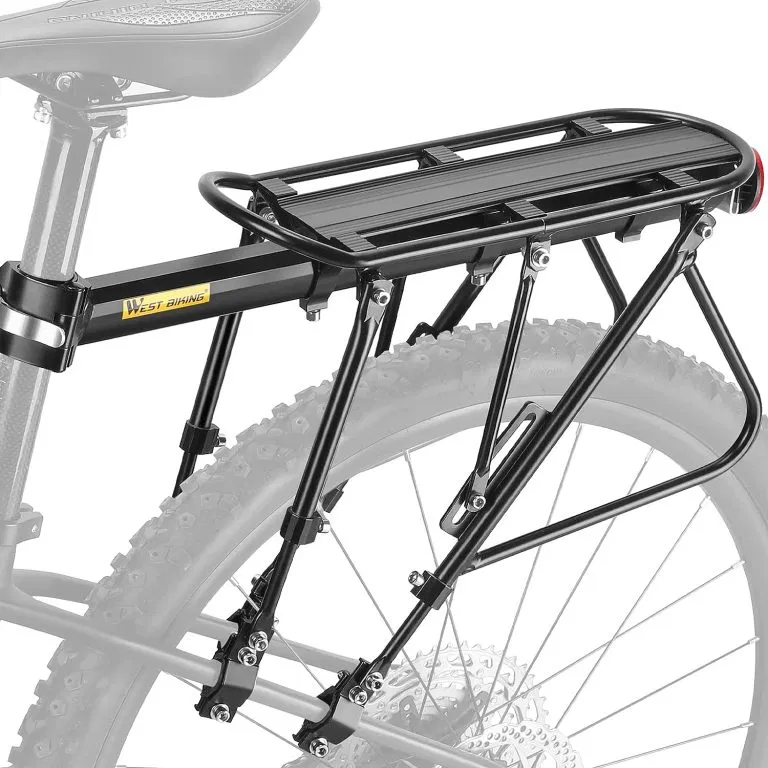
- 【High Quality Materials and Construction】The bike rear rack is made of high quality hard Aluminum Alloy.This material is so light that it won’t put a big load on your bike; In addition, the high-strength aluminum alloy is again so strong that it can easily carry up to 115 pounds;
- 【Large Size Reflector And Adjustable Fender】The large size bicycle reflector to increase visibility on the night cycling and ensure your night cycling safety.The adjustable and removable fender to keep your back,bags or panniers dry and clean when cycling on rainy day or muddy road!
- 【High Quality Screws】The bike cargo rack Equipped with stainless steel screws and anti-loosening&shock-proof nuts ensure the bike rack will not go loose on rough road or get rusty after light rains!
- 【Enlarged Side Wings 】The enlarged side wings on both sides efficiently protect the panniers or bags from getting into the bike spokes or scratching by the wheels.
- 【Adjustable Structure】The top panel is adjustable from 16″-18″ in length;the telescopic side support rods can be stretched from 11″-15.75″.The adjustable structure allows you adjust the length and height of the bicycle luggage rack as you needed to fit most of bicycles(bike seat tube needs 2 inches high and Seat Tube Diameter 2.2-3.3 cm / 0.85-1.3″).
Last update on 2026-03-08 / Affiliate links / Images from Amazon Product Advertising API
Rack Types for Mountain Bikes
3 Rear Bike Rack Types Explained
Mountain biking is one of the most popular outdoor activities. Learn about the different rack mounting styles, and hit the trails with a better riding setup.
Protect your gear and keep it safe and centered while you ride!
Identify Different Rack Mounting Styles
Other common mounting styles are trunk-mounted racks, frame-mounted racks, and seatpost-mounted racks.
In short, each style has a distinct impact on both performance and cargo stability on the bike.
Most casual riders don’t need a permanent rack, but trunk-mounted racks are easy to install and remove at will.
Frame-mounted racks are sturdier and can hold more weight, but they must be installed with care and alignment for optimal use.
Choosing a rack mounting style to match your riding style and overall installation simplicity is key.
Explore Trunk-Mounted Racks
Trunk racks offer ease of installation and lightweight convenience. They tend to have a lower weight limit, 30-40 pounds but offer better stability.
These racks can greatly disrupt bike aerodynamics – sometimes so severely that handling is adversely affected. They fit most bike frames, but compatibility depends on the bike.
Explore Frame-Mounted Racks
Frame-mounted racks top the charts in durability and load capacity, frequently carrying up to 110 pounds.
Proper alignment is crucial throughout every ride to ensure consistent, smooth shifting performance.
Installation requires a direct, secure attachment to the frame itself, which can limit overall versatility compared to other rack styles.
Explore Seatpost-Mounted Racks
Seatpost-mounted racks provide an adaptable, lightweight option.
This is because they have very low load limits (often 20-25lbs) and can pose hazards if overloaded.
The 15R rack is suitable for all types of bikes and is super simple to install and uninstall.
Understand Full Suspension Compatibility
Complete suspension systems can make the installation of a rear rack more problematic.
Specialized racks for these bikes definitely exist, but sometimes, they need a bit of modification to accommodate them.
Finding the right balance between rack stability and suspension performance is critical.
Choosing the Right Rear Rack
Choosing the best rear bike cargo rack for your mountain bike is a key step to improving your two-wheel adventure. It’s essential to find a quality bike rack that suits your bike and lifestyle.
By learning about what to consider, you can ensure you select a rear rack that fits your needs.
Assess Your Mountain Bike Frame
Start by measuring your bike frame to determine if the rack will work with your setup.
Find mounting points on your frame that line up with the rack you’re using.
Frame geometry is also important. An improperly fitted rack can cause a top-heavy bike to feel wobbly.
Refer to manufacturer specifications for recommended racks specific to your model.
Determine Load Capacity Needs
Next, determine how much cargo you usually carry. Understanding this allows you to select a rack that accommodates your required load capacity.
Look at the rack’s capacity, rack mounting system, and other features.
Be sure to select one that supports your maximum anticipated load, considering the additional weight of accessories such as bags, tools, etc.
Consider Rack Material (Aluminum, Steel)
What material you choose for your rack makes a big difference.
Aluminum racks will be lighter, while steel racks will be more durable and better rust-resistant.
Consider how the conditions you ride in affect your material choices.
For instance, if you live in a place with a lot of rain, a corrosion-resistant aluminum rack is your best bet.
Check for Full Suspension Clearance
Make sure there’s enough clearance for your suspension. Easy rear wheel movement is crucial; it can’t restrict rear wheel movement.
Clearance issues can arise, so test fitting your rack is absolutely critical to determine any possible issues.
Prioritize Secure Attachment Mechanisms
Research attachment systems to ensure rock-solid reliability.
A well-mounted rack will keep your load from sloshing around on rides.
Consider design elements that prevent items from being stolen so you can feel secure while exploring the world.
Balance Aesthetics and Functionality
Lastly, look at aesthetics in combination with practicality. Find a style you like that works well with your bike.
However, don’t forget to prioritize your use and functionality first.

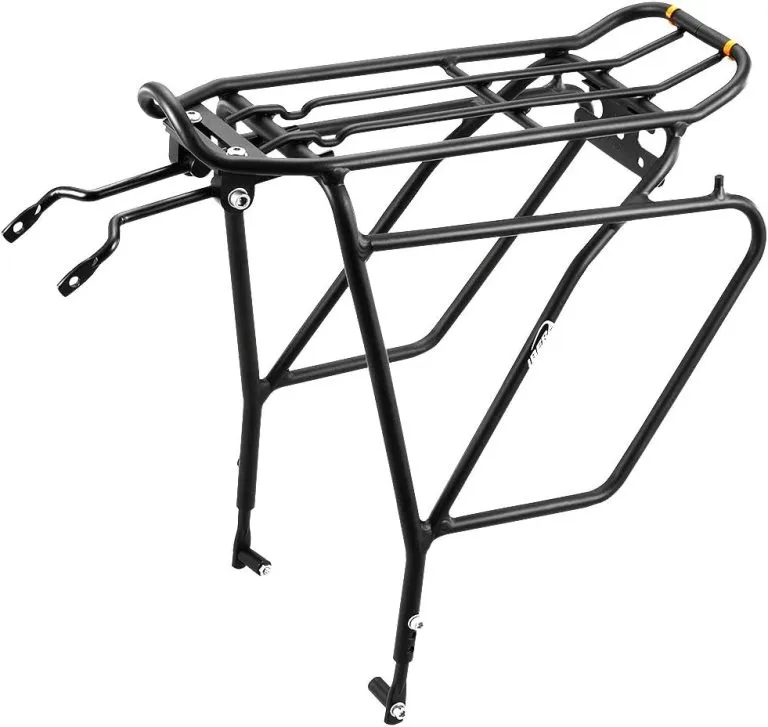
- QUICK RELEASE CLAMP for easily mount on the seat post or take the rear bike rack off, you can change the seat height easily. Come with tools and installation instruction. Fit most of bikes like the 26″-29″ mountain bike but not fit for rear suspension bike, fat tire bike, soft-tailed bike, carbon fiber bike, folding bike.
- FENDER under seat provides more protection for your bag or panniers in rainy day or mud road,keep your bicycle dryer and cleaner.You can also remove this rear fender when you don’t need it. Fit for 26-29″ mountain bike frames.
- SOLID&STURDY bike rear rack made of high strength aluminum alloy material, coupled with stainless steel screws to help you ride freely in rainy days or humid conditions. Two “W” shape side bars effectively protect your bag from scratching by the wheel or spokes and also protect your safety.
- FUNCTIONAL: Upgrade loading system cargo rack can carry some stuff on your trip,work commute, even carry the people. The adjustable structure allows you adjust the rack lenth as you wanted and the telescopic rods can be stretched 1-6inch to fit your bike frames.
- Package Items: Rear red reflector increases visibility on the night cycling to ensure your night cycling safety. Elastic bungee cord can stretch around your carrier bag or gears for extra security while riding on rougher road.
Last update on 2026-03-08 / Affiliate links / Images from Amazon Product Advertising API
Installation Guide for Rear Racks
Adding a rear bike cargo rack to your mountain bike will elevate your rides to a whole new level.
Most importantly, it allows you to carry additional gear safely and conveniently, whether using bike panniers or bike cargo rack bags.
Following a concise installation process ensures that your rack is installed safely and soundly.
Gather Necessary Tools
Now, begin laying out all the tools you need to install it properly.
You’ll need a few basic tools, such as a 10mm socket wrench, Phillips and flat-head screwdrivers, and measuring tape to fine-tune adjustments.
You want to ensure you have everything before you start so that you aren’t stopping mid-installation.
Look for any unique parts your particular rack needs, like spacers or extra brackets.
Follow Manufacturer Instructions
Individual bike racks have downloadable installation instructions provided by the manufacturer.
Watch out for torque specs to make sure you’re getting nice and tight bolts where needed.
Whether through installation videos or diagrams, this can give you helpful visual insight. Missing installation steps can put your rack’s safety, security, and overall stability at risk.
Ensure Proper Rack Alignment
Align the rack parallel to your rear wheel and make sure it sits flatfoot on the ground.
A level rack is essential for proper weight distribution.
Constantly adjust mounting points as needed and test fit before installation to ensure everything is aligned before committing.
Tighten All Bolts Securely
Use a torque wrench on every bolt to ensure proper tension per the manufacturer’s recommendations.
Take a close look at each attachment point to ensure all is good and tightly attached.
Regularly checking in on bolt tightness will help keep your rack secure in the long run.
Test Rack Stability Before Riding
As a final step to ensure everything is tight, perform the shake test to see if you detect any wiggle.
A short test ride is a great way to determine how well the rack carries a load.
Consider your fit and make any necessary adjustments.
Weight Distribution and Capacity
Getting an even weight distribution becomes crucial when loading a rear bike rack, particularly for mountain biking.
Correctly placing your cargo improves your ride and keeps you safe. The starting point is being aware of your rack’s maximum weight capacity.
Each manufacturer has a different capacity weight limit, so familiarize yourself with these significant numbers.
Remember the total weight of your cargo plus the rack weight.
As you’re loading, watch your overall weight capacity closely.
This will ensure you do not exceed the weight limits specified by your rack’s guidelines.
Understand Weight Limits
The best way to ensure you’re making wise choices is to familiarize yourself with the weight limits provided by your rack’s manufacturer.
Keeping a close eye on your actual load to remain within these limits is critically important.
Be sure to adjust your packing strategy according to the rack’s weight capacity, and be mindful not to overpack the bike, which can throw off your balance.
Distribute Weight Evenly
Distributing weight evenly across the rack is crucial to stay safe and balance your load.
Strap down or secure any items to avoid them shifting in transit.
Mount larger and heavier cargo further forward on the bike to improve stability.
On extended rides, proactively monitor your weight distribution to stay in control and ride smoothly.
Avoid Overloading the Rack
Understanding the dangers of exceeding your rack’s weight capacity is essential. Load carefully. Regularly check your cargo to avoid overloaded scenarios, and remove items from your packing list when necessary.
Knowing the dangers of an overloaded rack will help you stay safe.
Adjust Suspension for Added Weight
Adjust your bike’s suspension settings to cater for the additional weight.
Once you’ve made all of these changes, test-ride your bike to feel the difference and adjust as needed.
Check your owner’s manual for specific instructions on adjusting suspension stiffness.

- Universal Mount System: Hook-and-loop straps securely attach the rack to full suspension or hardtail MTB seatstays without requiring eyelets.
- Adjustable Top Plate: Independently levels to match your bike’s geometry, providing a stable, balanced platform for any type of terrain.
- QuickTrack Compatible: Works seamlessly with Topeak TrunkBags, TrunkBox, and KLICKfix / RackTime Snapit 1.0 / Vario system bags.
- Strong & Reliable Build: Aluminum and engineering-grade polymer frame supports up to 26 lb (12 kg) of cargo with rugged off-road stability.
- Safety-Ready Design: Includes a rear reflector clamp and tail light mount, improving visibility for safer rides in low-light conditions.

Last update on 2026-03-08 / Affiliate links / Images from Amazon Product Advertising API
Maintaining Your Rear Bike Rack
Maintaining your rear bike rack will ensure your fun new biking adventures stay safe and enjoyable.
Routine maintenance is as simple as a few easy steps, and it will increase your bike rack’s longevity and functionality.
Regularly Inspect for Damage
Developing a checklist for regularly inspecting your rear bike rack is an essential first step.
Check for rust, cracks, bends, or other signs of wear on the rack structure.
Addressing the damage or wear immediately will keep the damage from becoming a bigger problem.
Watch for attachment points that undermine your rack’s safety, where individual pieces can loosen and detach over time.
Clean After Muddy Rides
Your rack will need some cleaning after a ride in wet or muddy conditions.
Prevent germ spread by using a damp cloth or sponge to get dirt and germs off surfaces.
This simple practice keeps your rack shiny and new and protects against wear and tear that could cause unseen damage.
Then, make sure to let the rack dry all the way to avoid it rusting.
Tighten Loose Bolts
Keep an eye on all bolts and screws, making sure they are tight at all times.
When you use a torque wrench, you’ll know that your bolts are tightened to the manufacturer’s specifications.
Tighten any loose material screw or nut down each time before climbing aboard to ensure a secure ride. Plus, get in the practice of checking bolt tightness periodically after every few rides.
Lubricate Moving Parts
Lubricate any moving parts of the rack on an as-needed basis.
Lubrication using proper lubricants is key to preventing rust and keeping things operating smoothly.
Ensure everything is sliding smoothly is a simple task, and identifying problems first could save you from future headaches.
Regular lubrication, on the other hand, saves your bearings and prolongs the lifespan of your rear bike rack.
Safety Tips for Using Rear Racks
A quality rear bike cargo rack for mountain bikes will make all the difference in your ride, especially when you have bulky loads to haul.
Safety must come first; with a basic understanding of essential precautions, you can keep your cargo safe and focus on what matters most—having a fantastic bikepacking trip.
Secure Cargo Properly
Use more than one strap to hold bulkier goods down on the rack to prevent your goods from moving around.
It is extremely important that everything is securely strapped down so that nothing can wiggle or slide. Before you load up and roll out, make sure nothing is loose.
Especially during low-light conditions, increase your visibility by adding reflective straps or lights to your load.
Use Straps and Bungees Effectively
Use high-quality straps or bungees to keep cargo secure. Test various configurations to see what keeps your stuff most secure.
Having a few quick-release straps on hand for those surprise cargo moments is always a good idea.
Straps should wear out. Regularly check them for wear and replace them as needed to maintain their effectiveness.
Check Cargo Before Each Ride
Get into the habit of checking your load before each trip.
Double-check that everything is fastened down tight and balanced on the rack. Inspect your straps and bungees for fraying before each use.
If possible, shift the cargo around to make it more stable.
Adjust Riding Style for Added Weight
You need to adjust how you ride when you carry cargo using a bike cargo rack.
Brake sooner and more deliberately, and watch for turns and hazards.
Practicing riding with loaded bike panniers can work wonders to boost your confidence in handling your bike.
Be Aware of Wider Profile
Understand that using a loaded rear rack makes your bike wider.
Be extra vigilant when riding on bike paths that may be narrow or busy with other pedestrians and cyclists, and make your intentions known to other users.
Check your load overhead, and adjust your riding position to balance the bike with wider loads.
Optimize Rack Performance on Trails
Optimize your rear bike rack performance on the trails.
This means your gear is always safe, snug, and within reach, allowing you to return to what matters most—riding.
Toward that goal, having the flexibility to change your gear configuration depending on the trail situation is key.
If you will be on a more technical, rocky trail, change what you’re taking with you.
Finally, consider how you stack them for better balance and easier handling.
Tying down everything securely is very important to avoid items from moving around during bumpy transports.
Double-strapping with a couple of extra straps for bumpy backcountry trails will offer more stability.
Take your setup out for longer test rides and adjust cargo placement based on what you learn from the trail.
Selecting high-quality, durable materials to build racks is critical to extensive rack success.
Choose racks made from quality, non-corrosive metals or durable composites that can handle the rigors of MTB.
Test the strength-to-weight ratio of different choices to guarantee strong rack performance without the excess weight. Ultimately, investing in a good, sturdy rack will save you money.
It’s often wise to read user reviews, which can give you a good idea of how racks perform in more challenging conditions.
Reactions about how easy the rack was to install and its stability will be most helpful.
Try out racks in-store to see how they work, or order online from a retailer with a good return policy.
Recommendations from experienced mountain bikers can guide your choice, ensuring you select a rack that meets the demands of the trails you ride.

- Dimensions: 16.92 x 12.4 x 6.1 inches (L x W x H). These 2 pack waterproof bike panniers are designed for most bicycles with rear rack. Suitable for cycling, traveling, commuting, camping and outdoor.
- 1 main compartment with 20L capacity for storing carry-on items such as clothes, maps, drinks, tools, riding gear or other daily necessities while riding. Flap closure design, convenient for you to access the internal items.
- Made of waterproof polyester material, effectively prevent rain, water, mud, dust from entering this bag quickly. Easy to clean, just wipe gently with a damp cloth.
- Designed with two metal hooks on the back and a quick-release buckle to help you secure the bag to your bike’s rear rack for easy installation and removal.
- A handle design makes it easy to carry this bag around in comfort. You can alter how to carry depending on your needs.
Last update on 2026-03-08 / Affiliate links / Images from Amazon Product Advertising API
Panniers and Accessories
When it comes to trail biking, the right accessories, such as bike cargo racks and panniers, truly enhance the adventure.
These bike cargo rack solutions allow you to carry your necessary gear while freeing up your hands to steer and climb through technical terrain.
Explore Pannier Bag Options
Understanding how various sizes and styles of panniers will fit into your overall setup is critical.
Consider bags that offer quick access and good organization.
For example, look for models with separate compartments to ensure items stay organized.
Panniers made from waterproof material are best for keeping your contents protected from rain or puddle splashes.
Check that the bags will work with your rear rack.
When they do not fit properly, bags can be uncomfortably prone to rubbing against the frame.
Consider Rack-Top Bags
Rack-top bags are great for on-the-go access to often-used items on extended road and gravel rides, such as snacks or a multi-tool.
Select panniers designed to mount securely on your rear rack to lessen swaying or wobbling.
More importantly, though, is judging the carrying capacity of these bags.
Think about your typical ride distance and what you’ll want to bring along.
If safety is essential, choose products with features such as reflective material to make you more visible in low-light conditions.
Add Lights for Visibility
Adding lights to your rear rack makes you much more visible at night.
Choose lights with multiple settings, giving you more power to adapt to your situation.
Ensure they are all securely mounted while remaining easily reachable for on-the-fly adjustments.
Regular battery checks and functional tests make it easy to keep your lights working when needed.
Use Fenders for Protection
Adding fenders to your bike will keep cargo protected from dirt and puddles.
Test their fit with your bike’s rear rack so you can be sure they’ll play nice together.
Choose fenders that can be quickly added to or removed from the bike so you’re not locked into fendered commutes only.
Proper care and regular maintenance will have them lasting longer than you could imagine.

- Compatibility: Bike pannier bags fits most bike racks, including those for city, mountain, road, electric, and hybrid bikes, etc. Please confirm your bike rack size before purchasing. Bicycle bags compatible: Support for Width Less Than 6 inches Bike Rack
- Rain Cover & Water Resistant: An added waterproof rain cover to upgrade its water-resistant capabilities. This bike saddle bag for bicycles is made of 600D Oxford fabric with a water-resistant PVC layer, making it an ideal bike rear rack bag. Effectively stay away from the humid climate even when caught in a sudden downpour
- Large 34L Capacity: This KEMIMOTO pannier bike bags has been upgraded to a large capacity of 17L per bag, and the total capacity of 2 bags is UP to 34L. Includes 2 main compartments for each bag. Plus the 2 pockets on the outside, ideal storage for ebike accessories, daily essentials, biking gear. Ideal for grocery, commuting, and outdoor trips
- Double System Fasteners: 6 heavy-duty straps secure these bike saddle bags for rear rack, with 2 extra side hooks so you won’t need to worry about bouncing while riding. Easy to mount for hassle-free riding
- Obtuse Angle Design: The bike bags for bicycles rear rack feature an optimized obtuse angle shape to ensure ample pedaling space, preventing heel strikes while riding. This thoughtful design delivers a smoother, more comfortable cycling experience
Last update on 2026-03-08 / Affiliate links / Images from Amazon Product Advertising API
Conclusion
The best rear bike rack for mountain bikes gives you the best performance on the road or trail.
Love having the freedom to carry more gear without affecting your bike’s balance and maneuverability?
Select the appropriate rack style and adequately fit it for an enjoyable ride without bumps and clanking.
As with any equipment, regularly inspect and maintain your rack to keep it performing safely.
Always consider that the right rack opens up the world to new adventures.
Try various models and styles, and consider what you’ll do on your bike.
Think about the ways a rack can accommodate your lifestyle.
Whether you’re tackling trails or the daily grind, the right kit is key.
Research your options thoroughly, pack your gear accordingly, and get rolling with clarity and confidence.
Ride safely and help ensure every journey is an opportunity.
Frequently Asked Questions
What is the benefit of using a rear bike rack on a mountain bike?
With a rear bike cargo rack, you can easily transport bulky items and other gear, enhancing your bike commuting experience. It provides better weight distribution, ensuring you’re more balanced and in control on rugged trails during your bikepacking trip.
Can I install a rear rack on any mountain bike?
Before buying a bike cargo rack, inspect your bike’s frame and mounting points to ensure compatibility. Rear racks don’t work on all mountain bikes.
How much weight can a rear bike rack hold?
The best bike cargo racks can hold up to 40 lbs. To ensure safe usage, always refer to the manufacturer’s instructions for your individual rack.
Are there different types of rear racks for mountain bikes?
Sure, but plenty of bike cargo racks exist, including bolt-on, quick-release, and adjustable racks. Each type has special qualities that best suit varying biking needs.
How do I install a rear bike rack?
Start by positioning the bike cargo rack over your bike’s mounting locations. Ensure you use the included hardware to tighten everything down securely. As always, follow the manufacturer’s directions for optimum safe use.
How do I maintain my rear bike rack?
Check your bike cargo rack often for loose bolts or wear and tear. Clean it regularly after rides, especially in wet or muddy conditions, to avoid rust and deterioration.
What accessories can I use with my rear bike rack?
Panniers, trunk bags, and bike cargo racks are all fair game. These quality bike rack accessories help you maximize your carrying capacity and simplify how you carry gear on your rides.