Transporting your bike safely is essential for any cyclist who loves to explore new trails or commute efficiently.
A car bike holder or bike rack for a car provides a reliable solution, ensuring that your bike reaches its destination without damage.
Several types of bike racks are available on the market, each with unique features designed to meet different needs:
- Trunk Mount Racks: Affordable and portable, but may limit trunk access.
- Hitch Mount Racks: Sturdy and easy to install, though they can obstruct rear doors.
- Roof Mount Racks: Versatile and space-saving, yet require lifting bikes onto the roof.
- Spare Tire Mount Racks: These are easy to install and remove but typically hold fewer bikes.
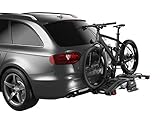
- Premium, high-load capacity bike rack ideal for e-bikes and heavy mountain bikes.Distance between bikes : 9 inch. Max wheelbase : 1300 mm..Max wheelbase : 1300 mm.
- Integrated folding bike loading ramp
- Fits 1.25″ and 2″ receivers
- Fast and effortless tool-free installation
- Quickly attach and secure bikes with torque limiting knobs and ratcheting wheel straps
Last update on 2026-03-08 / Affiliate links / Images from Amazon Product Advertising API
This article provides a comprehensive guide on choosing your vehicle’s right bike transport solution.
We will explore various types of bike racks, weigh their pros and cons, and recommend top brands and models to consider.
By the end of this guide, you will have the knowledge needed to make an informed decision about safe, hassle-free bike transportation.
Understanding Different Types of Car Bike Holders
Transporting your bike safely begins with choosing the right type of bike rack.
There are four primary bike rack types available:
1. Trunk-Mounted Bike Racks
Trunk-mounted bike racks attach to the rear of your vehicle using straps and hooks.
These racks are generally the most affordable option, making them popular for casual cyclists.
Advantages:
- Affordability: Typically priced between $50 to $200.
- Portability: Easy to install and remove.
- Adjustability: Fits various car models.
Disadvantages:
- Limited Load Capacity: Can usually carry 2-3 bikes.
- Trunk Access Issues: Access to the trunk is blocked when installed.
- Security Concerns: This may pose challenges for locking bikes securely.
2. Hitch-Mounted Bike Racks
Hitch-mounted bike racks attach to your vehicle’s hitch receiver. There are two styles: platform and hanging.
Advantages:
- Sturdiness: Offers a stable and robust solution.
- Ease of Installation/Removal: Simple to mount and dismount from the hitch receiver.
Disadvantages:
- Cost: Prices range from $150 to over $500.
- Rear Door/Trunk Access Issues: Access can be blocked when bikes are loaded.
3. Roof-Mounted Bike Racks
Roof-mounted bike racks secure bikes on top of your vehicle, providing a versatile solution that maximizes cargo space.
Advantages:
- Versatility: Allows additional cargo space on the roof.
- Unobstructed Trunk Access: Keeps the vehicle’s rear free for easy access.
Disadvantages:
- Cost: Generally priced between $200 to $500+.
- Lifting Difficulty: Requires lifting bikes onto the roof, which can be challenging for some users.
- Fuel Efficiency Impact: Increased wind resistance may affect fuel efficiency during long drives.
4. Spare Tire-Mounted Bike Racks
Spare tire-mounted bike racks are designed to mount directly onto the spare tire at the back of your vehicle and are an easy-to-install option.
Advantages:
- Easy Installation/Removal: Simple attachment process.
- Unobstructed Trunk Access: Keeps trunk accessible when in use.
Disadvantages:
- Limited Capacity: Usually holds a maximum of two bikes.
- Compatibility Issues: May require removal of tire covers or additional tools for installation.
Each bike rack type has unique features, advantages, and limitations, making it crucial to choose one that fits your specific needs and preferences.
Detailed Comparison of Bike Rack Types
Cost Comparison
Bike racks vary widely in price, depending on type and model:
- Trunk Mount Racks: Generally the most affordable option. Prices range from $50 to $200.
- Hitch Mount Racks: These are more expensive but offer additional features. Prices range from $150 to over $500.
- Roof Mount Racks: Versatile and often pricier. Prices range from $200 to $500+.
- Spare Tire Mount Racks: A budget-friendly option with prices around $50 to $200.
Load Capacity and Number of Bikes
Understanding the load capacity and bike accommodation is crucial:
- Trunk Mount Racks: Typically accommodate 2-3 bikes. Limited load capacity due to their attachment method.
- Hitch Mount Racks: Can hold 2-5 bikes, depending on the model. Available in platform or hanging styles.
- Roof Mount Racks: Usually hold one bike per rack; multiple racks can be installed to carry several bikes.
- Spare Tire Mount Racks: Generally designed to carry up to 2 bikes.
Accessibility Considerations
Accessibility can significantly impact your experience:
- Trunk Mount Racks:
- Pros: Portable and adjustable for various car models.
- Cons: Often blocks trunk access, making it difficult to reach stored items.
- Hitch Mount Racks:
- Pros: Easy installation/removal, especially platform styles that simplify loading/unloading.
- Cons: Can obstruct rear doors or trunks when loaded, impacting access.
- Roof Mount Racks:
- Pros: Preserve trunk access entirely, allowing free use of the vehicle’s storage space.
- The cons: Lifting bikes onto the roof is required, which might be challenging for some users. Additionally, increased wind resistance can affect fuel efficiency.
- Spare Tire Mount Racks:
- Pros: Easy to install and remove. Maintain some level of trunk accessibility as they are mounted externally.
- Cons: It may require the removal of tire covers and can only hold a limited number of bikes.
Selecting the right bike rack involves balancing cost, capacity, and accessibility according to your needs and vehicle type.
Considering how each rack type affects trunk access is particularly important for hatchbacks.
Hitch mount racks often balance sturdiness and ease of use but may limit rear door access when loaded.
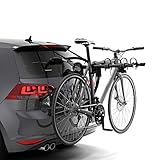
- Strong and secure hanging-style trunk bike rack for 1-3 bikes
- Secure fit to vehicle with 6-strap tightening system
- Integrated anti-sway cradles and 7″ of spacing between bikes prevents contact
- Compact cradle design accommodates a wide variety of bikes and frames
- Quick and easy, tool-free installation. Please note some frame styles may requrie a Thule Frame Adapter to securely attach to hanging bike racks.
Last update on 2026-03-08 / Affiliate links / Images from Amazon Product Advertising API
How to Choose the Right Car Bike Holder for Your Car
Selecting the perfect bike rack for your vehicle involves considering multiple factors to ensure it meets your needs.
Here’s a detailed guide to help you find the best bike rack for your car.
Key Factors to Consider
- Vehicle Type Compatibility
- Different racks suit different vehicle types. For instance, hitch-mount racks require a hitch receiver on your vehicle, while roof-mount racks need crossbars.
- Check if the rack is compatible with your car’s make and model.
- Number of Bikes
- Think about how many bikes you plan to transport regularly. Some racks are designed for single bikes, while others can hold up to five.
- Ease of Installation
- Look for racks that are easy to install and remove. Many modern designs feature tool-free installation, saving you time and effort.
- Security Features
- Ensure the bike rack has robust security features, such as integrated locks or a provision for adding locks. This prevents theft during stops.
- Trunk Access
- Assess whether you’ll need frequent trunk or rear door access when bikes are loaded. Some racks, like swing-away hitch mounts or certain roof racks, allow easier access than trunk-mount styles.
- Budget
- Prices vary significantly across different types and models of bike racks. Set a budget that balances affordability with quality and features.
Importance of Verifying Compatibility
Before making a purchase, it’s crucial to verify compatibility with specific car makes and models:
- Manufacturer Guidelines: Always refer to manufacturer guidelines and fit guides on their websites.
- User Reviews: Check user reviews and forums where real-world experiences can offer insights into compatibility issues.
- Retailer Assistance: Consult with retailers who may provide fitting services or expert advice tailored to your vehicle.
By carefully considering these factors, you’ll be better equipped to choose a car bicycle rack that perfectly fits your needs, ensuring the safe and convenient transport of your bikes.
Top Bike Rack Brands and Models to Consider
1. Küat Sherpa 2.0: A Stylish and Functional Hitch-Mounted Option
The Küat Sherpa 2.0 stands out in hitch-mounted bike racks, combining sleek design with robust functionality.
Design Aesthetic and Build Quality
Küat is renowned for its attention to detail, and the Sherpa 2.0 exemplifies this with its minimalist yet sturdy build.
Crafted from high-quality materials such as aluminum, it ensures durability without adding unnecessary weight to your vehicle.
The matte finish adds a touch of elegance, making it a visually appealing addition to any car.
Weight Capacity and Compatibility
The Sherpa 2.0 shines in versatility. It can support up to two bikes, each weighing up to 40 pounds, accommodating most standard bicycles.
This makes it ideal for casual riders and cycling enthusiasts who need a reliable transport solution for their valuable gear.
Compatibility is another strong suit, as the Sherpa 2.0 fits 1.25” and 2” hitch receivers.
This means whether you drive a compact sedan or a larger SUV, this rack is likely to fit your vehicle without any hitches—pun intended.
Ease of Use During Loading/Unloading Process
One of the standout features is its user-friendly design that simplifies the loading and unloading process:
- Integrated Cable Locks: Securing your bikes during transit provides peace of mind.
- Foot-Assisted Pivot System: This allows you to lower the rack with minimal effort, even when your hands are full.
- Tool-Free Installation: Setting up the Sherpa 2.0 is straightforward and requires no additional tools, ensuring you spend less time prepping and more time riding.
Users often praise how easily they can mount and dismount their bikes, even after long rides when fatigue might set in.
Diving into specific models like the Küat Sherpa 2.0 reveals how different brands prioritize various aspects of bike rack design—from aesthetics to practicality.
This blend of style and substance sets exceptional racks apart from the rest.
2. Thule EasyFold XT 2: The Ultimate Foldable Solution for E-Bikes
The Thule EasyFold XT 2 is a premium choice among hitch-mounted bike racks tailored for e-bikes.
Known for its innovative folding mechanism, this model is designed to save space when not in use, making it easy to store even in compact spaces.
Key features include:
- Innovative Folding Mechanism: This mechanism allows the rack to collapse into a smaller footprint, perfect for easy storage and transport.
- Dedicated Wheel Protection: Thanks to its specialized wheel holders, this product ensures that your bikes are transported safely, even on rough terrain.
- Ease of Use: The loading and unloading process is straightforward, simplifying the task of securing heavy e-bikes.
Additionally, the Thule EasyFold XT 2 boasts a robust build quality that can handle the weight of e-bikes while ensuring compatibility with various vehicle types.
This makes it an excellent option for those looking for a reliable and versatile car bike holder like those found at Fullerton Bicycle.
Pricing details place this model in the higher-end category, reflecting its advanced features and durable construction.
It’s an investment that delivers convenience and peace of mind, especially when transporting expensive e-bikes.
To ensure the safety of your bikes during transport, consider investing in a high-quality bike lock.
3. Yakima HighRoad: A Versatile Roof-Mounted Choice with Adjustable Wheel Tray Lengths
Regarding top bike rack brands, Yakima is known for its innovative solutions and durable designs.
The Yakima HighRoad is a great example of their commitment to quality, offering a roof-mounted option with adjustable wheel tray lengths that cater to various tire sizes.
Key Features
- Compatibility: The HighRoad’s adjustable design makes it versatile enough to accommodate many tire sizes, from road bikes to mountain bikes.
- Aerodynamic Shape: Its aerodynamic shape is engineered to minimize wind resistance, ensuring smoother and more fuel-efficient drives even during long journeys.
These features make the Yakima HighRoad an excellent choice for cyclists looking for a reliable and adaptable roof-mounted bike rack.

Installation Tips for Different Types of Bike Racks
Hitch Mount Installations Made Easy: Step-by-Step Guide
Installing a hitch-mount bike rack can seem daunting, but it becomes a straightforward task with the right approach and tools.
Here’s a step-by-step guide to make your installation smooth and efficient:
- Gather Your Tools: Before starting, ensure you have all the necessary tools on hand:
- Wrenches or socket set
- Screwdrivers
- Hitch pin or locking hitch pin (usually included with the rack)
- Lubricant (optional for ease of assembly)
- Prepare the Hitch Receiver:
- Clean out the hitch receiver to remove any debris or rust.
- If your bike rack requires it, apply a small amount of lubricant inside the receiver to facilitate easy insertion.
- Insert the Rack into the Hitch Receiver:
- Align the shank of the bike rack with the hitch receiver.
- Carefully slide the shank into the receiver until the hitch pin holes align.
- Secure with Hitch Pin:
- Insert the hitch pin through the aligned holes.
- Secure a standard hitch pin on the other side with a cotter pin or clip.
- For added security, consider using a locking hitch pin to prevent theft.
- Tighten Bolts and Screws:
- Many racks come with additional bolts to secure them. Use your wrench or socket set to tighten these bolts.
- Ensure all screws and bolts are securely fastened to avoid any wobbly movements during transport.
- Attach Bike Cradles or Platforms:
- Attach any cradles or platforms that hold your bikes, depending on your rack model.
- These usually slide into place and are secured with additional bolts.
- Test Stability:
- Give the rack a few firm shakes to ensure it’s securely attached.
- Double-check all connections and tighten them as needed.
- Load Your Bikes:
- Lift your bike onto the rack, placing it carefully into cradles or platforms.
- Secure each bike using straps or clamps provided by the manufacturer.
- Double-Check Securing Mechanisms:
- Ensure all straps, clamps, and locks are tightly fastened before hitting the road.
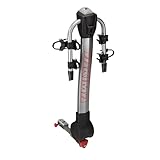
- Can hold 2 bicycles for maximum convenience with a traditional frame that attaches to cars, trucks, and SUVs; Compatible with 1.25-inch and 2-inch hitch receivers
- Equipped with superior aluminum and durable powder coat finish that stands up to any adventure while on the road as a car bike rack and bike holder
- Features an UpperHand Lever that simply tilts the rack for easy vehicle access and folds flat for compact storage; Securely fasten your bikes to the rack using ZipStrips
- Swiftly secure and lock the bicycle rack onto your car; Can fold down with a press of a button for a lower profile bike hitch rack
- Keep your bicycles from bumping into each other during transport
Last update on 2026-03-08 / Affiliate links / Images from Amazon Product Advertising API
Roof Mount Installations Simplified: Common Mistakes To Avoid During Setup Process
Roof-mounted racks offer versatility but require careful setup to ensure safety and functionality:
- Choosing Correct Crossbars:
- Verify that your vehicle has compatible crossbars installed.
- Check weight limits to avoid overloading.
- Ensure equal spacing between front and rear supports for balance.
- Avoid placing mounts too close to edges, which could compromise stability.
- Securing Rack to Crossbars Properly:
- Follow manufacturer guidelines strictly when attaching mounts.
- Double-check the tightness of all clamps and bolts regularly.
- Use assistance if needed; lifting heavy bikes alone can be risky.
- Consider investing in lift-assist features if available.
- Aerodynamic Considerations:
- Position bikes parallel to minimize wind resistance during travel.
- Secure loose parts like wheels or pedals that could cause additional drag.
By following these detailed installation tips for both hitch-mount and roof-mount bike racks, you’ll ensure a secure fitment, making bicycle transportation safe and hassle-free.
Roof Mount Installations Simplified: Common Mistakes To Avoid During Setup Process
Installing a roof-mounted bike rack can be straightforward if approached with the right mindset and attention to detail.
Here are some essential bike rack installation tips to ensure a smooth setup:
1. Ensure Proper Tightening Mechanisms
- Verify that all locking and tightening mechanisms are securely engaged during installation.
- Double-check each connection point to prevent any unwanted movement of the rack or bikes.
2. Avoid Contact Points Between Bikes
- When securing multiple bikes, maintain adequate spacing to avoid contact points between them.
- Use padding or spacers if necessary to prevent scratches or damage during transport.
3. Use Protective Foam Padding
For trunk mount installations, use protective foam padding between the vehicle’s surface area and contact points from the strap system. This reduces the risk of scratches and ensures a snug fit.
4. Lift with Care
Lifting bikes onto the roof can be challenging. Employ safe lifting techniques or get assistance if needed. Utilize step stools or ladders for added height and stability.
5. Check Aerodynamic Fit
Ensure that the bike rack is positioned to minimize wind resistance. Position bikes with minimal protrusion beyond the car’s profile to enhance fuel efficiency.
6. Regular Maintenance Checks
Periodically check the tightness of bolts and straps, especially before long trips. Inspect for any wear and tear on straps or mounting points that could compromise safety.
Following these bike rack installation tips and being mindful of common pitfalls can ensure a secure and efficient setup for your car bike holder system.
Creative Uses Beyond Just Bicycles: Exploring Versatility Of Bike Racks
Bike racks are not limited to just transporting bicycles; they offer a variety of creative uses that can significantly maximize your vehicle’s utility.
Discover additional uses for bike racks and enhance your transportation capabilities with these versatile options.
Alternative Uses for Transporting Equipment
- Kayaks: Many hitch-mounted and roof-mounted bike racks can be adapted to carry kayaks. You can safely transport your watercraft to your favorite paddling spot by securing the kayak using specialized mounts or straps.
- Surfboards: Roof-mounted bike racks are particularly useful for transporting surfboards. The vertical clearance provided by these racks allows you to securely fasten your surfboard, ensuring it stays in place even during long drives.
Maximizing Storage Space
- Combined Cargo Carriers: Some roof-mounted bike racks can be combined with cargo carriers, offering extra storage space for luggage, camping gear, or other bulky items. This dual functionality is especially beneficial for family trips or outdoor adventures where additional storage is essential.
- Vertical Clearance Utilization: Roof mounts provide significant vertical clearance, which can be creatively used to transport long items like ladders, skis, or fishing rods. By utilizing this space efficiently, you free up interior space in your vehicle for passengers or other essentials.
Additional Tips
- Ensure all items are securely fastened and balanced to prevent shifting during transit.
- Check the weight limits of your bike rack to avoid overloading.
- Consider investing in additional straps or mounts designed specifically for the equipment you wish to transport.
Bike racks offer more than just a solution for cyclists; they provide a versatile platform for carrying various types of gear.
Whether heading out on a kayaking trip or needing extra storage space, these innovative uses can transform how you travel and transport equipment.

- Swing-Away Design: Swing the fully loaded 4-bike rack away from your vehicle with just one touch, providing effortless access to your car’s rear whenever you need it.
- Quick and Secure Installation: Tool-free setup in minutes with the locking SpeedKnob and AutoPin features that automatically position and lock the rack to your 2″ hitch receiver.
- Ultimate Bike Protection: Fully padded arms and zero-hassle ZipStrips keep your 4 bikes (up to 40 lbs each) secure and scratch-free during transport.
- Versatile Compatibility: Fits a wide range of bicycle styles and sizes, from mountain to road bikes, with a total weight capacity of 150 lbs; Folds down compactly when not in use.
- Take It Easy: Since 1979, Yakima has worked to simplify the way people travel and transport recreational sporting equipment. We put safety, sensibility, and street smarts into every product design.
Last update on 2026-03-08 / Affiliate links / Images from Amazon Product Advertising API
Car Bike Holder Conclusion
Choosing the right car bike holder is crucial for ensuring safe and convenient transportation of your bicycles.
With a variety of options available, it’s essential to explore different types of bike racks—trunk mount, hitch mount, roof mount, and spare tire mount—each offering unique features tailored to specific needs.
When selecting a bike rack, consider:
- Vehicle compatibility: Ensure the rack fits your car model.
- Number of bikes: Choose a rack that can accommodate all your bikes.
- Ease of installation: Look for user-friendly designs.
- Security measures: Opt for racks with robust locking mechanisms.
Investing in a quality product ensures you meet your specific requirements without compromising safety standards.
Brands like Thule, Yakima, and Küat provide reliable solutions worth considering.
Remember to verify compatibility with your vehicle before purchasing any car accessories to avoid potential issues.
Understanding your individual needs and preferences can help you select a bike rack that enhances your cycling adventures.
Explore the options available and invest in a dependable car bike holder that makes transporting your bikes seamless and secure.
Car Bike Holder FAQs
What are the different types of bike racks available for cars?
The four primary types of bike racks include trunk-mounted racks, hitch-mounted racks, roof-mounted racks, and spare tire-mounted racks. Each type has unique features and benefits, catering to various needs and vehicle types.
How do I choose the right bike rack for my car?
When selecting a bike rack, consider your vehicle’s compatibility, ease of installation, security features, and the number of bikes you plan to transport. It is crucial to verify that the rack is suitable for your specific car make and model.
What are the advantages of hitch-mounted bike racks compared to trunk-mounted ones?
Hitch-mounted bike racks generally offer greater sturdiness and load capacity than trunk-mounted racks. They also provide easier access to the trunk area when bikes are loaded. However, they may be more expensive and require a hitch receiver on your vehicle.
Can I use a bike rack for purposes other than transporting bicycles?
Yes! Bike racks can be versatile tools. They can also transport kayaks or surfboards, maximize storage space with combined cargo carriers, or utilize the vertical clearance provided by roof mounts.
What should I consider regarding installation when using a bike rack?
Ensure proper tightening mechanisms are engaged during setup and avoid contact points between bikes while secured. For trunk mount installations, using protective foam padding between the vehicle surface and contact points from the strap system can help prevent damage.
Which brands are recommended for high-quality bike racks?
Leading brands known for their quality bike racks include Thule, Yakima, Saris, and Kuat. Popular models include the Küat Sherpa 2.0, Thule EasyFold XT 2, and Yakima HighRoad, each offering unique features tailored to different user needs.