Key Points
- Lumens are the defining measure of bike light brightness and directly impact your visibility and the road’s visibility. The more lumens, the more visible you are at night or in dimly lit spaces.
- The optimal lumen range varies by riding environment: 100–200 lumens for well-lit urban areas, 200–400 lumens for suburban commutes, 400–600 lumens for rural roads, and 300–600 lumens for off-road trails. For daytime riding, a minimum of 100 lumens and a flashing mode increase visibility.
- Beam pattern and lens optics are key to getting the most out of your visibility solution. With adjustable beams and wide coverage, they light your path and your immediate surroundings, so you can spot debris.
- Battery life and weather resistance matter. Rechargeable lights and a waterproof design provide reliable operation in any condition, and the extended battery life is great for longer rides.
- Properly mounting and aiming both front and rear lights increases efficacy and safety. Mount lights at the proper height and angle to prevent blinding others, while ensuring the greatest visibility for yourself.
- Keep your lights in tip-top shape!
- SUPER BRIGHT : Our bike safety lights for night riding with 2 LED lights high lumens bring you brightness to make everything in front of you illuminated and clear, protecting you from darkness and unknown, ensuring the safety of you and your family.
- 6 MODES : Features 6 different modes of the front light which you can switch conveniently. 6 modes of the front light are as follows: Left Strong Light; Left Weak Light; Right Strong Light; All-On; Breathing Light; Strobe.
- SHOCKPROOF & WATERPROOF : Made of aluminum alloy and meeting the standard of IPX4 Waterproof, our bike lights front are capable of fighting the toughest situations such as encountering heavy rain or riding on muddy roads, like your most loyal friends and guards.
- EASY TO INSTALL & CARRY : With simple structure and lightweight, our bicycle lights are extremely easy to get installed and taken at any time and anywhere. Meanwhile, in a total of 4oz, our bicycle lights front are portable enough to be carried and used as a normal flashlight.
- GREAT GIFT CHOICE : Come and order our light for bike as a gift for your friends, children, boyfriend/girlfriend, husband/wife who are enthusiastic about riding bike at night on Valentine’s Day / Thanksgiving Day / Christmas Day. Enjoy sports with our bike headlight set.
Last update on 2026-10-14 / Affiliate links / Images from Amazon Product Advertising API
A bike light for safe riding should have at least 200 lumens for city use and 500 lumens or more for dark or rural roads.
Brightness aids visibility to others and illuminates your path at night. Weather, street lights, and speed play a role in determining the effectiveness of a bike light.
Others select lights with additional bells and whistles, such as wide-angle beams or blink modes, for increased visibility.
Then hit these key points to choose the right light for you.
What Are Lumens?
Lumens indicate the volume of visible light a source radiates.
For bike lights, this figure indicates how bright the light will appear to the human eye.
Brightness is paramount for riders, as higher lumens let you see more — and spot hazards faster — and be seen by motorists, pedestrians, or fellow cyclists.
Choosing the right lumens is a key aspect of staying safe on your bike, particularly as lighting conditions shift.
The Brightness Metric
Lumens are a direct measurement of the light intensity from your bike light. If the number is high, the light appears brighter, so you can see farther and wider on the road.
Others, like lux and watts, baffle people. Lux is how much light is hitting something — the amount of the path that’s actually lit, not just how powerful the bulb is.
Watts used to indicate how much energy a bulb consumed, but now with LEDs, that’s a poor way to judge brightness.
Lumens cut through this confusion by focusing on what really matters: the total visible light. Why know these numbers? If you cruise city streets, a 200–500-lumen light works well.
For darker roads, 250–500 lumens provides you with more exposure.
Off-road or trail riders seek out 1000 lumens or more to illuminate those rocks, trees, and curves. For the rear light, 30-100 lumens keep you visible to those behind you.
The Beam Pattern
The beam pattern determines how and where the light falls.
Others cast a broad beam, illuminating the trail’s borders. Others concentrate the light into a tight beam, which travels farther but leaves the sides in darkness.
Beam shape counts. Wide beams help you identify road edges and oncoming objects from the side. Concentrated rays let you see farther but can create blind spots.
Certain bike lights allow you to customize the beam, widening it for congested areas or narrowing it for open spaces.
A solid beam pattern helps riders spot curbs, holes, or critters in the dark. It can even help your eyes to acclimate more smoothly, making your ride less stressful.
The Lens Optics
The appropriate lumen output depends on where you ride. In cities, 200-500 lumens is often sufficient due to streetlights.
When you ride on rural back roads with minimal lighting, 500 lumens or more can save your life.
Off-road or on-trail, 1000+ lumens is best for seeing bumps and roots. Rear lights require far less—just 30 to 100 lumens.
In rainy or foggy weather, a front light with at least 500 lumens makes you visible and helps you see. Consider your most frequent paths.
For a quick guide, compare the usual light levels: city (200–500 lumens), unlit roads (500+ lumens), off-road (1000+ lumens), rear (30–100 lumens).

- Rearview radar with tail light provides awareness of vehicles approaching from behind up to 153 yards (140 meters) away
- Pairs seamlessly with your Edge bike computer and compatible smartphone as well as select Garmin wearables or the radar display unit
- When used with your compatible smartphone, the Varia app provides graphics — plus tone and vibration alerts — that indicate approaching cars
- When used with a compatible smartphone, Varia radar integrates with third-party apps such as Ride with GPS to overlay your maps with rearview radar alerts
- Daylight visibility up to 1 mile alerts motorists to your presence as soon as possible

Last update on 2026-10-14 / Affiliate links / Images from Amazon Product Advertising API
How Many Lumens for Safe Riding?
Lumens is the standard measure for bicycle light brightness. Riding safety in most cities requires a front bike light with an ideal brightness of 100-200 lumens for well-lit roads.
Street lighting significantly affects visibility; the brighter your surroundings, the fewer lumens you need to be seen.
Riders should always adjust their bike light brightness to the ambient light around them, ensuring visibility for themselves and drivers alike.
1. Urban Riding
For city commuting and well-lit streets, a 200-400 lumen front light offers a good compromise. With less street lighting, you need to push up to 500 lumens.
Some urban riders choose a lower setting for well-lamped blocks and a higher mode for darker blocks.
Battery life is important, too. If your commute is an hour or more, a lower setting extends your light’s life. If you pass through darker parks or alleys, a brighter light makes you feel safer.
2. Suburban Commutes
In the ‘burbs’, 400-600 lumens is safe. Rural roads are really dark, so lights in this range will illuminate obstacles for you and keep you visible.
Without lights, riding in the dark is dangerous.
A good light will illuminate potholes, debris, or animals. Illuminating your path and sides is critical, particularly when there are no other lights. Opt for a high-powered light if your route involves any unlit roads.
3. Rural Roads
Rural roads = virtually no streetlights. 600-1000 lumens front lights illuminate the trail ahead, and 800+ lumens are ideal for pitch-black routes.
Slow riders get by with 500–700 lumens; faster riders (over 24 km/h) need 700+ lumens.
Rear lights should be at least 100 lumens so drivers can spot you from behind. For darker trails, you’ll need a wide beam. This helps detect turns, bumps, and roots.
Off-road riding requires 300-600 lumens; however, more is safer.
4. Off-Road Trails
Daytime riding still requires lights. Go for the 100-plus lumens. Flashing modes make you pop. Select a light that doesn’t disappear in the sun.
Whether it’s important to be seen by drivers and other cyclists.
5. Daytime Visibility
Weather can diminish the effectiveness of your bike lights. Rain or fog will reduce visibility, even with a good headlight.
Cold temperatures can shorten battery life, while higher speeds require more lumens for maximum illumination.
Beyond the Lumen Count
An impressive lumen count on a bike light rings well, but it’s not the only factor in safety. Battery life, beam pattern, weather resistance, light placement, etc.
All factors impact how well a bike light works in the real world. In some parts of the world, such as Germany, with its StVZO rules, bike lights must be legally compliant in a manner similar to car lights.
When shopping for a bike light, consider how these considerations align with your riding style and regional regulations.
Battery Life
Long battery life keeps you visible on the road, especially during longer rides or commutes.
High-lumen lights consume power quickly, so a blinding light with a tiny battery probably won’t last your entire ride. Seek out rechargeables for less waste, more convenience.
Prior to purchase, review the manufacturer’s battery specifications and consider your average ride duration. Burning out on the way home is more than frustrating—it’s dangerous.
Weather Conditions
Rain and fog can dim bright lights.
Water droplets in the air scatter light, reducing your visibility and that of the driver. That’s why waterproof bike lights are ideal for night riders who brave all weather conditions.
Visibility plummets quickly in storms, and a weak or non-waterproof light can fail at the time of greatest need. Always test your lights in rain and fog, if possible — not just in clear weather.
Riding Speed
Quicker rides require more concentrated lumens. High speeds imply you’re getting further faster, and thus you require a beam that illuminates what’s in front of you well in advance.
Most lights let you adjust brightness, so you can burn more juice at pace and conserve battery when spinning slow.
If you ride fast, choose a light with sufficient lumens and a well-lit beam pattern to illuminate the trail.
- Bright Bike Lights for Night Riding: This bike light set includes both a bright headlight and taillight. Powerful LED headlight illuminates your path ahead while the bright red tail light keeps you visible to traffic behind. See clearly and be seen safely on every ride after dark. The front light can be horizontally rotatable 360°(rear light: 45° up/down), which makes light beam to reach different angles and ranges.
- 4 Light Modes for Every Situation: One-touch button switches between 4 modes—Full Brightness, Half Brightness, Slow Flashing, Fast Flashing. Whether navigating pitch-black trails or commuting through busy city traffic, you can instantly adapt to changing environments to ensure visibility and safe riding.
- USB Charging & Long-Lasting Battery: Simply plug-in your bicycle lights for easy and convenient rechargeability. The built-in 2000 mAh rechargeable battery of front light last from 5 to 12 hours(depends on the lighting mode selected). The rear light is built in 330 mAh rechargeable lithium battery, last from 9 to 16 hours (depends on the lighting mode selected).
- IPX4 Water-resistant: Engineered with IPX4 rating, this bike light set is built to withstand rain, snow, and mud. It ensures reliable performance in any weather, so you never have to worry about splashes or harsh environments. The perfect companion for your outdoor cycling.
- Easy To Install & Carry: The silicone mount strap is designed with four openings that tightly fit around most sizes handlebar or seat post. Both headlight and taillight can be fastened or removed in seconds without tools. Note: If the mounting bracket is damaged, you can tell us for replacement. Meanwhile, in a total of 3.5oz, our bike lights front and rear are portable enough to be carried.
Last update on 2026-10-14 / Affiliate links / Images from Amazon Product Advertising API
Light Distance
Light distance informs you how much you can see ahead, not just the brightness of the light. Smart lights glare just enough to hit your stopping distance, and illuminate what’s nearby, like potholes or debris.
Beam pattern counts here—spotlights punch through the dark in front, and floodlights throw light far and wide. Test your light in various locations, from urban streets to rugged trails, to determine whether it meets your requirements.
Front and Rear Lights
Front lights make you see, rear lights make you be seen. The front needs to be brighter to illuminate the path and should be directed 15-20 feet in front for optimal impact.
Rear lights don’t require as many lumens but must remain red and constant, so traffic can see you. Wearing both provides you with the optimal protection. All lights should have their own mount for stability, particularly if you use high-power lights.
Front vs. Rear Lights
Bike lights aren’t just about seeing in the dead of night—they’re also essential for ensuring visibility under different cycling scenarios.
The right bike light setup protects you, whether you bike commute on busy urban boulevards or deserted country lanes.
To See
A front light should be powerful enough to illuminate your path and identify any hazards in your way. They usually cite 600–1000 lumens for front lights on desolate roads at night.
That ensures you can spot potholes, signs, and road debris well in advance.
Others require less, such as kids or urban jerks, where 20–50 lumens is sufficient to be noticed and won’t offend or blind other people.
Dimmable brightness assists in varying situations—turn up the power for night riding, turn it down for city environments with decent street lighting.
A quality beam pattern distributes light broadly enough to illuminate the road’s shoulder and concentrated enough to cast far down the road.
Both help you identify potential hurdles or unexpected turns. Always choose a light with a solid, even pattern, not a scattered one — it reduces glare and enables you to see farther.
Front light positioning counts. Mount it so it shines straight ahead, not in the sky or your front tire.
For most safety, front light brightness always wins out—particularly when you ride fast or through rural areas. Many jurisdictions mandate a white front light visible from 150 meters (approx. 500 ft.)
To Be Seen
Rear lights announce your presence to cars and fellow riders. They’re more about visibility than road illumination at your back.
Most rear lights are 30 – 100 lumens, but 50–100 lumens is perfect for most city or suburban rides.
If you’re riding in daylight, a rear light with a flashing mode and 100–200 lumens is key—it can catch drivers’ eyes even in strong sunlight.
Blinkies attract more attention than a steady beam, particularly in broad daylight or a lot of traffic.
Popular with commuters and those riding at dawn or dusk, rear lights with 200 lumens in flash mode are effective. If you ride on country roads or rough trails, you will need a rear light of 200–300 lumens for additional visibility.
Always mount rear lights high on your seat post or bag so they’re not blocked by your coat or panniers. Regulations usually require a red rear light or reflector visible from 90 m (300 ft) away. Verify with your local regulations.
Mounting and Angle
Where you mount your lights is important. The higher and more centrally-located, the better they see you. Set front and rear lights so they point straight and don’t point down or up—try them out before you ride.
Mount each light securely, as a loose mount can cause your beam to bounce or direct it where it’s not needed. Try out your setup, have a friend give you a visibility test from a distance.
Proper Light Mounting

Mounting your bicycle lights in the proper location helps cyclists be seen and stay safe, especially in low-visibility conditions.
Proper mounting ensures the beam illuminates the road, providing optimal brightness and regulatory compliance wherever you ride.
Front Light Placement
Mount the front bike light on your handlebars for optimum visibility in various cycling scenarios.
This location, approximately 30–40 inches off the floor, provides a wide, uniform light output, ensuring maximum illumination.
A bar-mounted bicycle light helps you see bumps, road signs, and turns ahead more effectively.
Others supplement with a helmet mount for a backup light that tracks your noggin’s movements and helps spot hazards more quickly.
Make sure you keep the light free and clear of wires, bags, or bells. If your light is covered by a bag, then drivers might not see you!
Almost all new bike light sets depend on this system. If your light shakes loose during your ride, it won’t be effective, so always confirm it stays tight for safety.
Rear Light Placement
Rear lights make sure you are seen by cars and pedestrians behind you. The prime location is your seatpost, right under your saddle, but not obstructed by bags or jackets.
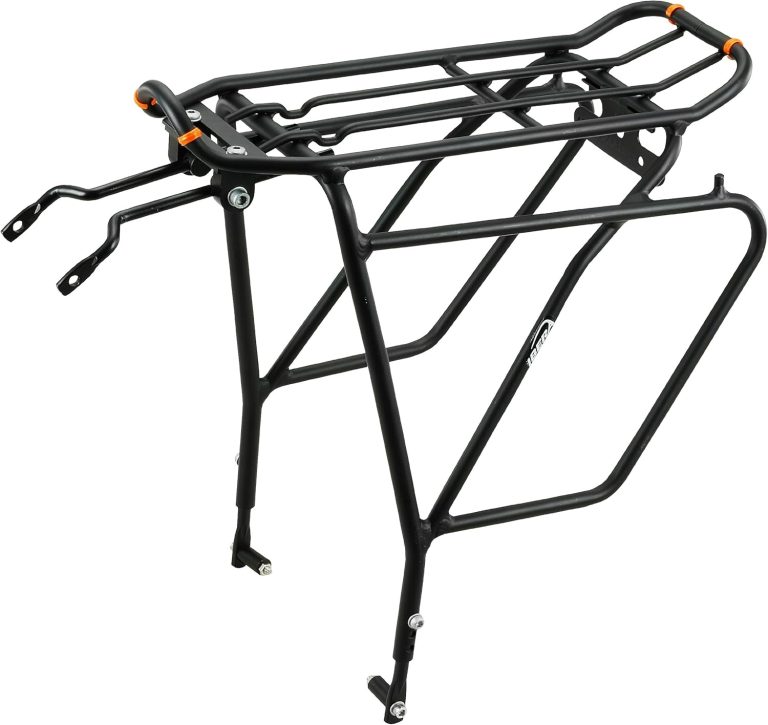
If you ride with a rear rack or a mudguard, ensure these do not conceal the light.
Proper light mounting: mount your rear light at the same height as car headlights—about 60–90 cm above the ground.
Inspect your lights before each ride, especially after rain or on rough roads, to ensure they remain bright and properly aimed.
- Rechargeable Bike lights: USB rechargeable front and back lights, built in 2000 mAh rechargeable lithium battery for headlight and built in 330 mAh rechargeable lithium battery for taillight.
- Four Light Mode Options: The headlight and taillight feature an one-touch switch with four different lighting modes depending on your preference. Include full brightness, half brightness, slow flashing and fast flashing.
- Advanced Design: With simple structure and lightweight, our bicycle lights are easy to carry. Rated IPX4 waterproof. The indicator of headlight turns red, when the battery power is too low.
- Easy Installation: The Headlight is equipped with a mounting bracket that can be easily fixed to the handlebar. The silicone mount strap for Headlight and Taillight are designed with four openings that tightly fit around most size seat posts. Both Headlight and Taillight can be easily loosen and fasten, and no tools are required. Note: If the bracket is damaged, you can tell us for replacement.
- Multifunction: This bike light set is versatile enough for cycling, hiking, camping, or any outdoor activity and can be used as emergency flashlight. This is great for cycling at night or in places where visibility and safety are concern.
Last update on 2026-10-14 / Affiliate links / Images from Amazon Product Advertising API
Angle and Aim
The angle of your lights affects their effectiveness. Point your front light slightly down so it illuminates the road, not oncoming eyeballs.
Too high and you blind drivers or other cyclists, too low and you miss potholes or signs.
Reposition the light if you switch terrain. Off-road riding may require a wider beam or higher angle to illuminate rocks and roots, while city streets require a tighter, downward beam to minimize glare.
Test your aim frequently and adjust accordingly.
Legal and Safety Standards
Global bike light rules vary. Some countries impose a lumen limit, while others take it based on color or blink rate. Read up on local laws before you ride — particularly if you journey or relocate to a new city.
Adhere to these principles. They protect you and protect you from tickets. Needs change, so check back every year for updates.
Global Lighting Standards

Bike light standards globally emphasize helping riders be seen and see well across various cycling environments.
These regulations typically state that bicycle lights must be mounted no higher than 150cm above the ground and must shine directly forward or backward.
The idea is to ensure the beam assists the rider in sighting ahead or helps others spot the rider from a distance.
When it comes to ideal brightness for bike lights, it depends on where and how you ride.
For city rides under street lights, a typical 200-600 lumen front headlight is common.
This spectrum allows you to illuminate the road, road signs, and pedestrians without blinding oncoming traffic. Your rear bike light, which alerts drivers and other riders to your presence from behind, should be 50-150 lumens for these conditions.
For instance, a 200-lumen front light is great for tortoise-paced town rides, but if you’re an accelerando or ride through shadowy areas, something closer to 600 lumens offers more protection.
If you ride in a group or in a city with lots of street lights, you might opt for a lower lumen output, but if you ride alone or in foul weather, a brighter light goes a long way.
In sketchy or dim environments, such as paths or unlit back roads, the odds shift. Here, the front light should produce at least 1200 lumens when mounted on the handlebars.
Helmet lights tend to be in the 600-1000 lumen range. These more powerful smart bike lights help detect sharp turns, sticks, or rocks.
For night rides in the remote woods, most riders opt to use both handlebar and helmet lights for optimal coverage. Remember, a 100-watt old-style bulb spits out around 1600 lumens, so bike lights in this range are strong for their size.
Rear lights commonly target daytime use now, as well. Flashing rear lights with 100-300 lumens or more are easy to notice on crowded roads, even in direct sunlight.
DayLights use short, bright flashes to get the attention of drivers and cyclists. This goes a long way to reducing accidents in heavy or quick traffic.
How the beam falls on the road is important. The brightest section should land around 5 to 6 meters (15-20 feet) ahead of you.
This prevents blinding oncoming individuals while still illuminating your path. Certain lights allow you to select constant or blinking modes, which can enhance visibility conditions.
Flashing modes will make you stick out in the day. On the front, 200-500 lumens flashing is ubiquitous, and on the rear, 100-300 lumens or more is now considered best practice for safety.
Our Conclusion
Selecting a bike light is about more than just the lumen rating.
On city streets, a front light with 200 to 500 lumens does a great job. For dark roads or trails, choose 800 lumens or higher. Rear lights require less, 50 lumens is often sufficient to remain visible.
Mount lights securely and direct them to illuminate the road ahead without dazzling oncoming traffic. Standards shift by country, so check locally.
Good gear makes rides safer and nights less perilous. Want to dive in deeper or trade gear tips? Connect, comment, or click ride.
Ride safe and keep those lights juiced.

- Super Bright & Wide Coverage:1000 Lumen super bright bike headlight creates a focused and powerful beam pattern, visible up to 650 feet, evenly illuminates from your tire all the way to where your eyes are looking. Additionally, eight auxiliary floodlights enhance penetration and provide a wider coverage area, ensuring optimal visibility even in challenging weather conditions like heavy fog and rain.
- 8+7 Lighting Modes: Our bike lights offer 8 (headlight)+7 (taillight) various lighting modes to meet different illumination needs, including high, medium, low, and several flash modes. Please note that there are three different ways to adjust the lighting modes of the headlamp: single-click, double-click, and long-press. The detailed instructions for using the bike light on the user manual for your reference.
- Efficient Charging, Long Runtime: The special two-port USB-C charging cable supports fast charging which can fully charge the headlight in just 2 hours and the taillight in 1 hour. Meanwhile, our bike lights for night riding can work for up to 4 hours at the highest brightness and 19 hours at the lowest brightness by virtue of the 2000mAh built-in battery. The rear bicycle light can last for up to 50 hours with the 350mAh rechargeable battery.
- IP65 Waterproof & Shockproof: Our bike lights front and back boasts a premium aluminum alloy casing for superior texture, excellent heat dissipation, resistance against shocks, and tough enough to withstand 5ft drops. Furthermore, the IP65 waterproof function can protect the bike light well even in heavy rain.
- Easy Setup, Versatile Usage: Our bike lights front and back features a mounting bracket and elastic strap, installation is tool-free and simple. Beyond enhancing cycling safety, these lightweight and versatile lights serve dual purposes as emergency lighting for outdoor endeavors such as hiking or camping. They can also be used on electric scooters, strollers, backpacks, and more, making them an ideal lighting solution for a variety of activities.
Last update on 2026-10-14 / Affiliate links / Images from Amazon Product Advertising API
Frequently Asked Questions
What are lumens in bike lights?
Lumens measure the total quantity of visible light a bike light produces; the higher the number, the brighter your light, enhancing your visibility in different riding conditions.
How many lumens do I need for safe night riding?
For safe night riding, a front bike light should provide at least 400-600 lumens of brightness, ensuring sufficient illumination of the road and hazards in low-visibility conditions.
Are more lumens always better for bike lights?
Not necessarily. Too many lumens can dazzle other road users and drain your battery quicker; thus, choose the right bike light lumen output based on your riding conditions.
How many lumens are recommended for rear bike lights?
Rear bike lights don’t require the same intensity as front bike lights; a 50 to 100 lumen rear tail light is typically adequate to ensure visibility in traffic from behind.
Why is the proper mounting of bike lights important?
Proper mounting of your front bike lights keeps them aimed where they need to be, enhancing visibility conditions and allowing you to see hazards clearly, ensuring a safe ride.
Do global standards affect bike light requirements?
Yes. Certain countries have minimum brightness and visibility requirements for bicycle lights. Never forget to check local laws to ensure your bike light sets meet legal requirements!
What else should I consider besides lumens when choosing a bike light?
Things to consider include beam pattern, battery life, weather resistance, and the right bike light for different cycling scenarios. These elements ensure your bicycle lights are dependable and useful in various riding conditions.