Key Points
- Be sure to double-check your beach cruiser’s frame and mounting points to see if the rear rack will fit well and won’t get in the way of brakes or fenders!
- Opt for a rack constructed from sturdy, rust-resistant materials such as aluminum or coated steel, ensuring it endures the beach elements and frequent rides.
- Just be sure to match the rack’s weight capacity to your typical cargo needs, and balance loads for safe, stable rides.
- Consider various rack designs and attachment methods, such as platform or basket racks, and select a rear bike rack for beach cruisers that suits your riding style.
- Install with care, trust the proper tools, and tighten all hardware snugly for safety and dependability.
- Care for your rack by cleaning it, rust-proofing it, and tightening the bolts after exposure to the beach or saltwater.
Rear bike racks for beach cruisers provide an easy option to transport bags, groceries, or even a small cooler on your ride.
Specifically designed to accommodate the broad frames and laid-back nature of beach cruisers, these racks combine functionality with style. Many are available in steel or aluminum, and some feature additional straps for added security.
To find the right rack, check its weight limit, mounting type, and ease of installation.

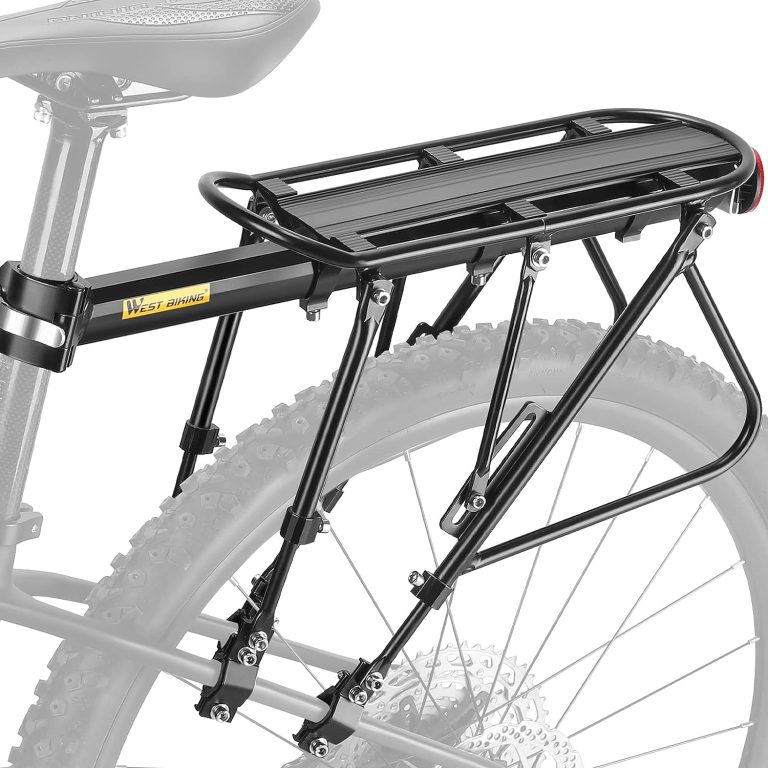
- 【High Quality Materials and Construction】The bike rear rack is made of high quality hard Aluminum Alloy.This material is so light that it won’t put a big load on your bike; In addition, the high-strength aluminum alloy is again so strong that it can easily carry up to 115 pounds;
- 【Large Size Reflector And Adjustable Fender】The large size bicycle reflector to increase visibility on the night cycling and ensure your night cycling safety.The adjustable and removable fender to keep your back,bags or panniers dry and clean when cycling on rainy day or muddy road!
- 【High Quality Screws】The bike cargo rack Equipped with stainless steel screws and anti-loosening&shock-proof nuts ensure the bike rack will not go loose on rough road or get rusty after light rains!
- 【Enlarged Side Wings 】The enlarged side wings on both sides efficiently protect the panniers or bags from getting into the bike spokes or scratching by the wheels.
- 【Adjustable Structure】The top panel is adjustable from 16″-18″ in length;the telescopic side support rods can be stretched from 11″-15.75″.The adjustable structure allows you adjust the length and height of the bicycle luggage rack as you needed to fit most of bicycles(bike seat tube needs 2 inches high and Seat Tube Diameter 2.2-3.3 cm / 0.85-1.3″).
Last update on 2026-09-22 / Affiliate links / Images from Amazon Product Advertising API
Choosing Your Ideal Rear Rack

Choosing your ideal rear rack for your beach cruiser involves considering a few important factors, such as compatibility with your bike and ensuring the rack’s fit, function, and safety.
1. Frame Compatibility
Begin with your frame. Measure your wheel size and frame geometry — racks aren’t one-size-fits-all. For instance, a rack designed for 26-inch wheels might not align with a 29-inch cruiser.
Look for eyelets or mounts around the rear dropouts and seat stays. These mount points just make installation that much easier and more secure. In the absence of eyelets on your bike, seek racks that employ clamp or strap mounts, but be aware that these can be less secure.
You want to make sure the rack doesn’t interfere with your brakes or fenders. Other racks obstruct rim brakes or sit too near wide tires, resulting in rubbing—or worse, safety concerns.
Lastly, ensure the rack fits your cruiser’s specific geometry — especially if you have swept-back seat stays or disc brakes.
2. Material Matters
Steel racks are robust and can support the heaviest loads, but weigh more than aluminum racks. Aluminum racks are lighter and resist rust well, a good option for coastal or humid areas.
Stainless steel is also available, combining durability with rust resistance, but it can be pricier. Notice the welds. Tight, clean welds translate into a rack that will withstand stress better.
The finish counts as well—powder coating or anodizing goes a long way toward preventing scratches and corrosion, something to keep in mind if you ride close to saltwater.
3. Weight Capacity
Be sure to check the rack’s maximum load rating. Some racks support loads of up to 36 kg, while lighter racks cap out around 9–11 kg. Overloading a rack can stress the frame or impact your bike’s handling.
Match racks to your typical load, groceries, or work bag! More-capacious racks tend to be more stable when you’re lugging around panniers or baskets.
Keep in mind that baskets and panniers have their own limitations—most carry around 4.5kg each. Exceeding these limits can make your bike wobbly.
4. Rack Style
Platform racks are flat and forgiving, allowing you to lash down weird-shaped gear. Strap-on racks are quick to put on but typically have lower weight thresholds and reduced robustness.
Basket racks provide you with a defined cargo area, but they won’t be compatible with every bike or every requirement. Select a style that fits your daily rides.
Your load varies? Then the platform rack is adaptable. For easy on-and-off, some racks provide quick-release systems. Ease of attachment matters too.
5. Adjustability
Certain racks allow you to adjust height or angle, which aids tire clearance or bag fitting. This flexibility comes in handy if you switch gears frequently.
Adjustable racks accommodate different-sized cargo. They can increase ride comfort by moving weight down or farther rearward.
See if the adjustments improve steadiness or help on bumpy trails. An adjustable rack will accommodate more bike styles and types, which can reduce your headaches down the road.

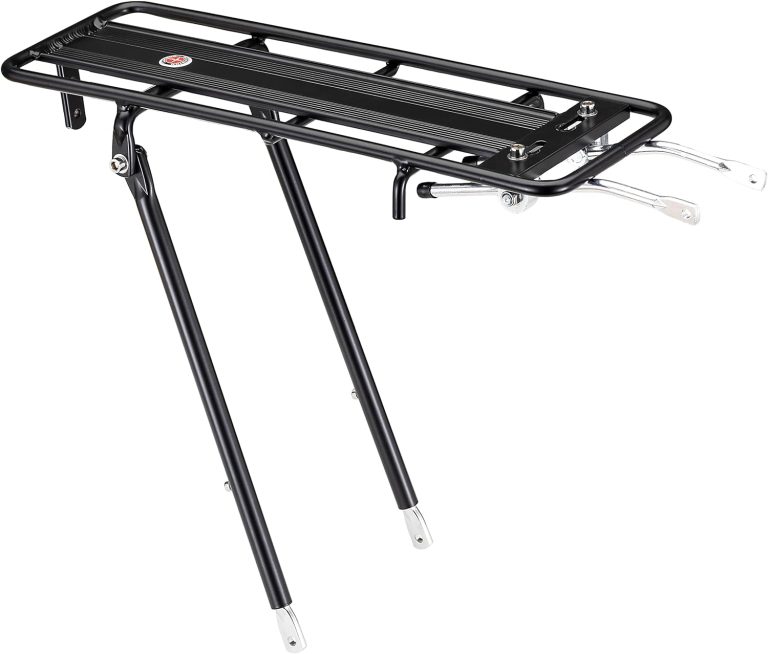
- 【Make Sure it fits Your Bike Before Order】: Make sure if your bicycle have eyelets next to the rear hub and eyelets in the seat stay(or 1 eyelet can use T adapter). Our rear rack requires the bicycle to have installation eyelets for the rear rack to ensure its load-bearing capacity.
- 【Pannier Rack for Touring】: The rear rack adds a lot of versatility, and is the most popular type of bike rack. Saving your back from carrying heavy loads, rear racks allow you to carry much more cargo on the road with you. Lots of cyclists use our rear racks when they’re bike touring or camping, also make great racks for a commuter looking to carry a pannier on their bike and extra gear to get to school or work
- 【Compatibility】: The rear rack is adjustable, allows to fit most adult bikes. Compatibility with 26″-29″ and 700c wheels, Disc and Non-Disc Brakes. So you can use it on MTBs, touring bikes and even gravel bikes. Heel clearance is excellent even with 3 panniers on the rear rack. One trunk bag up top and pannier on each side.
- 【Solid & Sturdy】: This bike rear rack is constructed with durable 6061-T6 aluminum, the rack maintains stiffness without weighing your frame down. This cargo rack included space to attach a reflector at the rear and designed the rack with a narrow width to keep weight as close to the center as possible for a stable ride. Once you’re packed up, it can carry up to 60 lbs of gear
- 【Easy to Use】: The bike rack comes with all the bolts and mounting brackets you need. Comes with instruction, you can refer to the assembly video too, it only takes a few minutes to assemble the bike cargo rack. Also Plenty of adjustments can be made to make it fit your bike. As you ride around, check the screws fastening your bike rack on occasion. If they become loose, they can rattle out. Please tighten them.
Last update on 2026-09-22 / Affiliate links / Images from Amazon Product Advertising API
Understand Mounting Systems

Rear racks are a convenient accessory for beach cruisers, but not all types of bike racks fit all bicycles. Understanding the basic mounting systems allows you to choose a configuration that’s secure, stable, and compatible with your bike frame.
Each rack has various pros and cons, particularly regarding installation, weight capacity, and what you can mount.
Frame Eyelets
Frame eyelets are small threaded holes on or near the rear dropouts, and occasionally the seat stays.
Most new cruisers come with them for rack mounting. Utilizing these eyelets is the simplest and most secure way, as the rack is bolted straight to the bike’s metal frame.
Eyelet mounting keeps the rack right close to the frame, resulting in less flex and better weight support. Most eyelet racks support up to 25 kg (55 lbs), and some are higher.
This is plenty for luggage, groceries, or even a little boogieboard, but not people.
The 6-8-inch width of standard racks can limit what fits, so you’ll end up having to strap down wonky-shaped things. Always make sure the eyelet spacing fits your rack.
Some racks feature movable arms, which allow for more convenient adjustment to fit wider or narrower bikes.
Installation is usually simple: line up the rack, thread in the bolts, and tighten them with a hex key.
Seat Stay Clamps
Seat stay clamps let you mount a rear rack when your cruiser doesn’t have eyelets. These clamps wrap around the seat stays and secure the rack arms.
Not all bikes are compatible; here’s why—some have thin or strangely shaped stays which don’t play nice with clamps. Always verify your frame before making a purchase.
Because clamps carry a lot of the rack’s weight, they must be sturdy and well-constructed. Stainless or alloy clamps usually last longer and are rust-resistant.
Lots of riders say clamp systems are easier to install than eyelets—no hunting down magic bolt holes or matching up threads.
Simply wrap the clamps, screw in the screws, and off you go. A few clamp kits provide additional adjustability, allowing you to mount racks to bikes with wide tires or fenders.
However, clamp mounts are not as solid. As with direct bolt-on racks, clamp mounts might not feel as solid, and it’s smart to check the tightness after rides.
Seatpost Mounts
A seatpost-mounted rack is the most versatile system—clamps wrap around the seatpost, supporting the rack above the rear wheel. This configuration operates for cruisers lacking eyelets or with atypical frame contours.
The primary constraint is weight. The majority of seatpost racks support only 10-15 kg (22-33 pounds), which is below the frame or clamp mounts. That’s okay for a small satchel, work implements, or light grocery items—not for more substantial hauls.
Verify the post diameter fits snugly and seek out racks that feature adjustable arms or platforms. These help level the rack and prevent it from banging against your saddle or rear brake.
Seatpost racks can conflict with dropper posts, suspension, or some rear lights. Just be sure nothing obstructs cables or moving components when mounted.

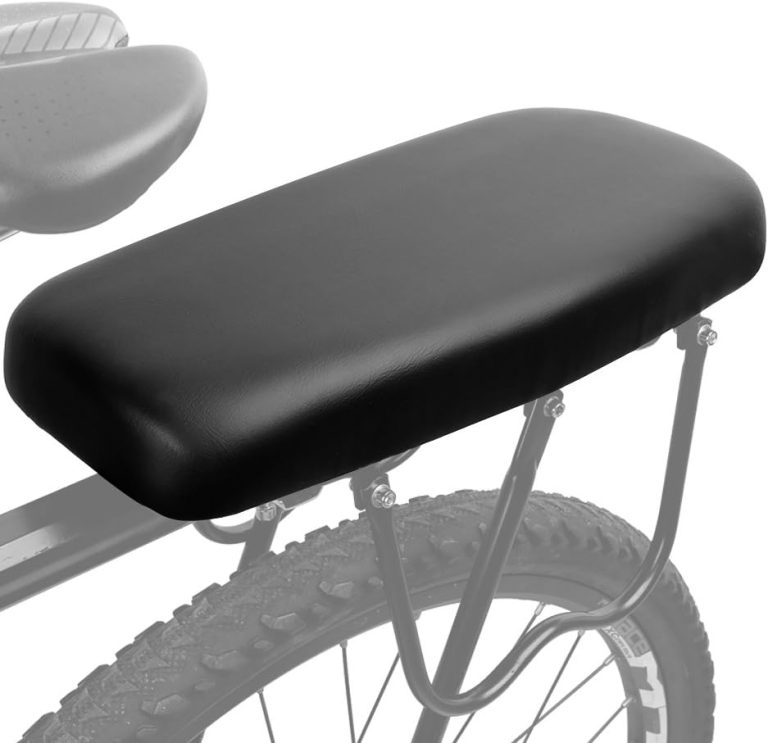
- Rear Bike Rack with Bike Basket: In the package you will receive both of a rear bike rack and a rear bike basket.
- EASY TO INSTALL: Fit Seat tube diameter: ≤34MM. Easy to install and come with tools and installation instruction. Bicycle luggage rack has a quick release clip for easily mount on the seat post. Installing the bike basket is a piece of cake, just tighten 4 screws and you’re ready to go
- HEAVY DUTY: This bike rear rack is constructed with durable 6061-T6 aluminum, the rack maintains stiffness without weighing your frame down. Our bike rear basket used thick pipe steel as material,covering with thick smooth powder coating,it’s very well made and built to last
- REAR BIKE RACK WITH BASKET BEST ACCESSORIES : Once you have a rack and basket, it’s still pretty useless without any accessories. So we provide the most suitable accessories to fit your rear bike baskets. 1*Liner. 1*Waterproof cover and 1*Cargo Net
- AFTER SALE SERVICE: We are always committed to customer satisfaction. If you encounter any questions or problems, please contact us. We guarantee to respond within 24 hours to resolve any issues you may have
Last update on 2026-09-22 / Affiliate links / Images from Amazon Product Advertising API
Proper Rack Installation

Backie bike racks for beach cruisers require precise installation to function properly and remain secure. Following the maker’s steps for your specific rack, such as a classic fender bike rack, is essential.
With a rack that fits your bike just right, you can lug panniers or a trunk bag with confidence. Proper rack installation and a little planning go a long way.
Gather Tools
Wrenches and Allen keys are the most commonly used tools for installing a rear bike rack.
Certain racks may require a Phillips screwdriver or mini-socket set, so it’s helpful to review the directions beforehand.
Organize your tools on a table. This way, you won’t drop tiny pieces, like bolts or washers, throughout the installation. If you have a mat or towel, lay it out to prevent parts from rolling away.
For racks with additional pieces – support struts, extra bolts – verify that all is out and prepared. If you’ve never used one, say, a torque wrench or Allen key, take a minute to get the feel for it. This will prevent you from stripping bolts or overtightening screws.
Align Correctly
Begin by positioning the rack against the mounts on your beach cruiser’s frame. The rack should rest above the back wheel, with its support arms aligned with the frame holes or eyelets.
A mini bubble level comes in handy to ensure the rack rests straight and flat.
Position the rack so that it clears the brakes, brake cables, and fender edges. This keeps everything secure and prevents the rack from rubbing or hindering movement.
Ensure that the rack is aligned with the center of your bike. If it leans too far to one side, your load might slide, or the bike might feel unbalanced in corners.
Adjust the rack’s angle so it doesn’t tilt forward or backward. A well-balanced rack can help distribute weight equally over the rear wheel.
Secure Hardware
Grab the appropriate-sized wrench or Allen key and tighten each bolt and screw.
Begin at the frame mounts and progress toward the outer struts. If your rack kit includes lock washers, put one on each bolt.
For good measure, a drib of thread-locking compound keeps bolts from rattling loose over time. It pays to check your rack’s bolts every month or so, particularly if you’re a fan of rough roads.
If any bolt appears rusty or stripped, replace it immediately. Maintaining your hardware keeps your rack safer and extends its life.
Customizing Your Cruiser Setup

The essence of customizing a beach cruiser is tailoring your ride for your own daily lifestyle!
Whether you crave additional cargo space with a rear bike rack, enhanced ride comfort, or a little flair, there are tons of options, including reliable fenders and high-capacity racks, to personalize your cruiser’s configuration.
Mixing Accessories
Everything from skid plates to racks and baskets is essential for cyclists. Rear racks, such as a classic fender bike rack, are a perfect match with baskets, panniers, or a trunk bag, allowing you to transport groceries, backpacks, or even a laptop case.
Others may opt for front racks or child seats for additional utility.
Before throwing new accessories into the mix, make sure they’re compatible with your rear rack. Not all bags or baskets work on all racks, and pairing the wrong gear together can cause mounting or stability issues.
Pay attention to the rack’s weight limit—typically in pounds—and keep your total load under it. The way you pack your rack matters too; stuff smaller items into durable bags to prevent shifting during rides.
Sort your load by size and usage, placing heavier or frequently used items on top so you can grab them with minimal effort. This can keep your ride smooth and your gear protected.
DIY Modifications
Some riders like to take it past store-bought accessories. DIY mods can be as simple as adding hooks for shopping bags, mounting a wooden platform, or even extending the rack to fit odd-shaped loads.
These hacks provide you with a tailor-made answer to specific requirements.
Simple household tools—screwdrivers, wrenches, zip ties—allow you to customize your rack. For instance, you could add a bungee cord to hold down loose items or a bracket for a rear light.
Just be sure any modifications you make don’t compromise the strength of the rack or its mounting points. Remember to safety first! Record your modifications. Take notes or photos to assist with repairs or future upgrades.
This habit will save you time and trouble down the road.

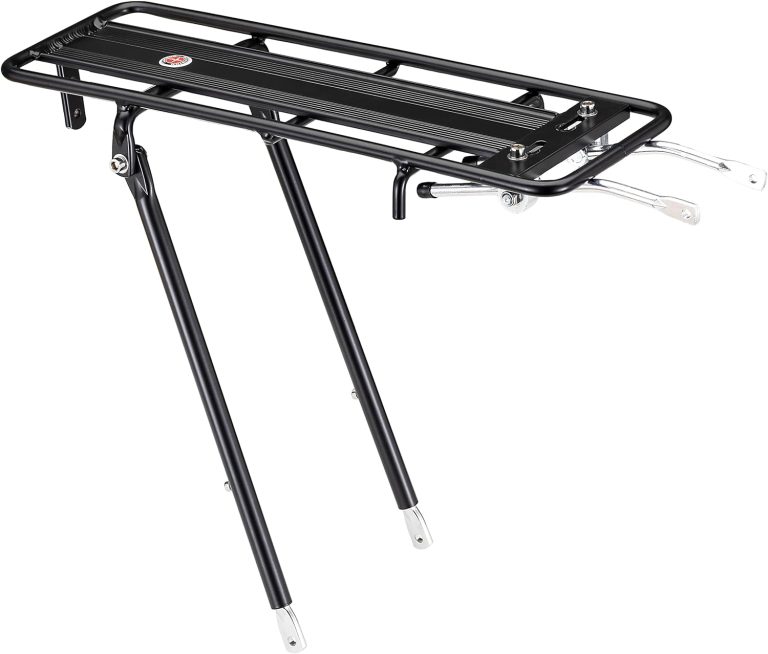
- 【Make Sure it fits Your Bike Before Order】: Make sure if your bicycle have eyelets next to the rear hub and eyelets in the seat stay(or 1 eyelet can use T adapter). Our rear rack requires the bicycle to have installation eyelets for the rear rack to ensure its load-bearing capacity
- 【Rear Bike Rack with Basket】: Basket on top of the rack, this is a very convenient way to carry things, and enough to carry backpacks and other large objects. you can just toss things in it and start riding, with some bungee cords to make sure it doesn’t bounce out. You have the option to install just the bike cargo rack without basket, providing you with versatile choices for your outings
- 【Compatibility】: The rear rack is adjustable, allows to fit most adult bikes. Compatibility with 26″-29″ and 700c wheels, Disc and Non-Disc Brakes. So you can use it on mountain bikes, touring bikes and even gravel bikes. Heel clearance is excellent even with 3 panniers on the rear rack. One trunk bag up top and pannier on each side
- 【Solid & Sturdy】: This bike rear rack is constructed with durable 6061-T6 aluminum, the rack maintains stiffness without weighing your frame down. This cargo rack included space to attach a reflector at the rear and designed the rack with a narrow width to keep weight as close to the center as possible for a stable ride. Once you’re packed up, it can carry up to 60 lbs of gear
- 【Easy to Use】: The bike rear rack comes with all the bolts and mounting brackets you need. Comes with instruction, you can refer to the assembly video too, it only takes a few minutes to assemble the bike cargo rack. Also Plenty of adjustments can be made to make it fit your bike. As you ride around, check the screws fastening your bike rack on occasion. If they become loose, they can rattle out. Please tighten them.
Last update on 2026-09-22 / Affiliate links / Images from Amazon Product Advertising API
Weight Distribution
Good weight distribution is crucial for secure, stable cruising. Distribute your weight evenly side to side. If one side gets too heavy, your bike can tip during turns or stops.
Heavier objects should nestle near the center of the bike, directly over the rack supports. It keeps the bike’s balance point low, making it easier to steer. If you’re riding on rough terrain or climbing hills, shift your load accordingly.
Experimenting with Configurations
Experiment with various configurations. You can keep a giant basket for your errand riding and swap out some panniers on longer rides.
Try out new accessory placements and experience how each change impacts your comfort and bike handling.
Simple adjustments—like shifting a bag or switching a seat—can enhance both style and utility. Accessorize with lights, reflectors, or even custom paint to make your cruiser look as good as it rides.
Beach Environment Maintenance
Rear bike racks for beach cruisers face harsh beach conditions, with sand, saltwater, and sun all accelerating wear on components like fenders.
Maintaining the rack is important for both safety and your bicycle’s longevity. With a little regular attention and intelligent storage, these high-capacity racks can last much longer and perform much better.
Regular Cleaning
Salt and sand cling to racks quickly, especially following a waterside day. Use a mild soap and water solution to clean the rack, knocking off grit and salt that can scratch or corrode the metal.
Wipe with a soft cloth to maintain the finish and prevent scratches.
Once washed, rinse thoroughly so no soap or sand remains – this prevents rust. Dry the rack completely with a towel or air-dry to remove moisture. Rust forms fast on wet racks, so this step counts.
If you ride along the beach frequently, wash the rack every week. This habit benefits the rack as well as maintaining your bike’s drivetrain.
Rust Prevention
Metal racks, such as a classic fender bike rack, require special treatment by the ocean. Spray or wax all metal parts with a clear coat to protect against salty air.
If you’re in the market for a new rack, opt for aluminum or stainless steel, as these materials resist rust better than plain steel, making them ideal for various bike rack types.
If you’re not riding, keep the bicycle indoors or cover it with a full bike cover when outside. Heat, sun, and humidity can all damage both the rack and the bike. Indoors, select a cool, dry place out of direct sunlight.
If you have electric beach cruisers, make sure to top up the battery every two to three months, and keep the battery and its charger at least 10 cm from walls to allow airflow.
Look out for rust spots every couple of weeks. If you do find some, treat them with a rust remover or light sanding to prevent the rust from spreading.
Bolt Checks
Bolts and screws can loosen from bumps, salty air, or sand. Check every bolt for tightness bi-weekly, after beach rides. Loose bolts can cause rack failure or rocky rides. Swap out any missing or rusty bolts immediately to keep things safe.
It helps to keep a checklist for regular tasks: cleaning, bolt checks, and tire care. On each ride, observe for any rattling or shifting in the rack—this can indicate a loose bolt ahead of a hassle.
Smart Storage
Hang your bike – but ONLY if the rack and wheels can handle the weight.
Hard bikes or low tires can warp rims. You’ll require a minimum of 180 cm vertical clearance, along with additional overhead space for head clearance and hardware such as pulleys, rings, and straps.
To prevent your bike from knocking into the wall, maintain a 60–90 cm clearance between the wall and the rack’s edge. Always keep bikes out of the heat and sun to prevent tire and frame deterioration.
In prime locations—cool, dark, and dry—tires can endure for 20 years. For added security, fuel up batteries away from walls, approximately 10cm for ventilation.

- Compatibility: Bike pannier bags fits most bike racks, including those for city, mountain, road, electric, and hybrid bikes, etc. Please confirm your bike rack size before purchasing. Bicycle bags compatible: Support for Width Less Than 6 inches Bike Rack
- Enhanced Waterproof Protection: An added waterproof rain cover to upgrade its water-resistant capabilities. This bike saddle bag for bicycles is made of 600D Oxford fabric with a water-resistant PVC layer, making it an ideal bike rear rack bag. Effectively stay away from the humid climate even when caught in a sudden downpour
- Large 34L Capacity: This KEMIMOTO pannier bike bags has been upgraded to a large capacity of 17L per bag, and the total capacity of 2 bags is UP to 34L. Each side bag features 1 main compartment and 1 outer pocket, offering a total of 4 storage spaces. Ideal for ebike accessories, daily essentials, biking gear, grocery, commuting, and outdoor trips
- Double System Fasteners: 6 heavy-duty straps secure these bike saddle bags for rear rack, with 2 extra side hooks so you won’t need to worry about bouncing while riding. Easy to mount for a smooth ride.
- Obtuse Angle Design: The bike bags for bicycles rear rack feature an optimized obtuse angle shape to ensure ample pedaling space, preventing heel strikes while riding. This thoughtful design delivers a smoother, more comfortable cycling experience
Last update on 2026-09-22 / Affiliate links / Images from Amazon Product Advertising API
Accessorize for Functionality

Rear bike racks on beach cruisers don’t have to be just a spot to stash gear; with the right bike rack recommendations, you can transform your ride into a vehicle for errands, day trips, or commuting.
Accessorizing with reliable fenders and a high-capacity trunk bag not only complements your rack’s design but also provides actual storage, helping to keep your rides fluid.
Baskets
A rear basket is one of the no-brainer solutions for transporting stuff on a cruiser bike. Certain baskets are designed to sit directly upon a classic fender bike rack, ensuring they remain secure and don’t clunk around.
The proper fit matters—if it’s too loose, it moves around; if too tight, it’s difficult to remove.
Shape and size count. Deep baskets secure clunky bags, while shallow ones are perfect for breezy fares such as beach towels or groceries.
Seek out solid attachments–certain baskets bolt on, some have heavy-duty clips or straps.
Metal baskets stand up best over time, particularly those with rust-resistant coatings. Plastic ones are lightweight but will snap under heavy loads. Woven baskets are adorable but require a liner for wet conditions.
Pannier Bags
Pannier bags are great for larger loads or extended rides. They hang from your rear rack, often with clips or straps that let you remove them quickly.
Certain racks are designed for easy pannier use, featuring wide rails and ample space between trays so bags don’t rub against the wheels or each other.
Volume is essential—these larger panniers each store up to 25 liters. Waterproof fabric means your stuff stays dry on rainy days. Certain even function roll-top closures and sealed seams.
Inside, some bags are padded, with pockets and dividers to keep gear like laptops, snacks, or a change of clothes easily accessible.
Pick bags that match your rack’s maximum weight (up to 36 kg, or 80 lbs) and are constructed from strong steel or lightweight yet durable aluminum.
Bungee Cords
Bungee cords are great for those quick little jobs—taping down a jacket or yoga mat, or even a box of groceries. Utilize sturdy, stretch-retaining cords, even after repeated use.
Not all bungees are created equal; thick rubber ones endure much longer, and some even have coated hooks so you don’t scratch your rack.
Experiment with new ways to strap stuff down. Criss-cross for weird shapes, a simple loop for flat loads. Carry a few extra cords in your bag for when you discover that bonus on your ride.
They’re light, inexpensive, and occupy hardly any space.
Our Conclusion
Rear racks make beach cruisers into real workhorses. Throw a basket on the back, lug snacks, or tie on a dry bag for a sun-splashed ride.
Choose a rack that suits your frame and complements your ride style. Stick with stainless steel or aluminum for rust-free jaunts by the water.
Seek out racks that bolt on tight and hold their shape, even under a heavy load. Wash off salt and sand to maintain the rack’s strength and shine.
Trade in quick-release straps or a rugged milk crate for extra room! Good racks make every beach trip smoother. Here are a few ideas, test what suits, and show your best config to buddies.

- 🚴WATERPROOF HARD SHELL DESIGN: The bike rack bag is made of EVA, coated with PU. It features water resistant, sturdy, lightweight, and easy to clean. Solid shapes make it not deform and look stylish. The bike bag also comes with a rain cover, so no worry about cycling on a rainy day.
- 🚴9.5L CAPACITY: Our bike trunk bag includes a 9.5L main compartment, 3 inner mesh pockets, an extra top pocket, and an adjustable elastic cord. This help keep your riding essentials well organized. Dimension of 15.35 x 6.89 x 7.87 inches(L x W x H), large enough to store bike tool kit, pump, wallets, phones, power banks, small speakers, towels, clothes, food, drinks, bike locks, sunglasses, etc.
- 🚴REFLECTIVE: The reflective design on four sides increases nighttime visibility, and the taillights (not included) are hung on the rear strap making your cycling safer.
- 🚴EASY TO INSTALL: With 2 buckle mounting straps and a velcro strap, the bike pannier is installed and unloaded in seconds and it ensures its max stability and security. Adjustable straps make it fit on most bicycle racks, like mountain bikes, road bikes, e-bikes, hybrid bikes, and gravel bikes.
- 🚴YOUR GREAT BIKING BUDDY: With the shoulder strap and the handle, the bicycle bag is easy to carry. No matter what kind of occasion, such as picnics, camping, commuting, hiking, or travel, it will be your good partner.

Last update on 2026-09-22 / Affiliate links / Images from Amazon Product Advertising API
Frequently Asked Questions
What makes a rear bike rack suitable for beach cruisers?
Best rear bike racks for beach cruisers! Whether you’re looking for a rust-resistant rack that supports cargo or a classic fender bike rack for wide frames, stainless or aluminum racks are perfect for the coast.
How do I know if a rear rack will fit my cruiser?
Look for mounting points on your cruiser’s frame and measure the distance between the rear stays. Opt for a classic fender bike rack that’s designed for beach cruisers’ wide, curved frames.
Can I install a rear rack myself, or do I need a professional?
Nearly all rear bicycle racks come with straightforward directions and require only basic DIY skills and standard tools. If you follow the instructions, you can easily install a high-capacity rack yourself.
What maintenance does a rear rack need in a beach environment?
Rinse your bike rack in fresh water after exposure to sand or salt. Inspect for rust and tighten bolts regularly to maintain a durable, secure configuration.
Are rear racks on beach cruisers safe for carrying heavy loads?
Check the maker’s weight limit, typically 18–25kg, especially for high-capacity racks; spread the weight and don’t overload to ride safely.
What accessories work best with rear racks on beach cruisers?
Waterproof panniers, bungee cords, and crate baskets are fan favorites for securing belongings on bicycles. Choose accessories that are easy to wash after sandy rides.
Do all rear racks use the same mounting system?
No, mounting systems for different bike racks are varied. Some use eyelets, while others use clamps or seat-stay attachments. Always ensure the rack’s mounting style aligns with your bicycle’s frame for a secure fit.