Key Points
- Choose a rear bike rack based on your specific needs and bike type to ensure compatibility.
- Prioritize features like weight capacity, material durability, and attachment points when selecting a bike bag.
- Ensure easy installation and compatibility with your bike frame when installing a rear bike rack.
- Opt for rear bike racks with security features like locking mechanisms for peace of mind.
- Consider lightweight rear bike racks for bikepacking to reduce overall weight and enhance maneuverability.
- Follow a detailed installation guide to install your rear bike rack for optimal performance.

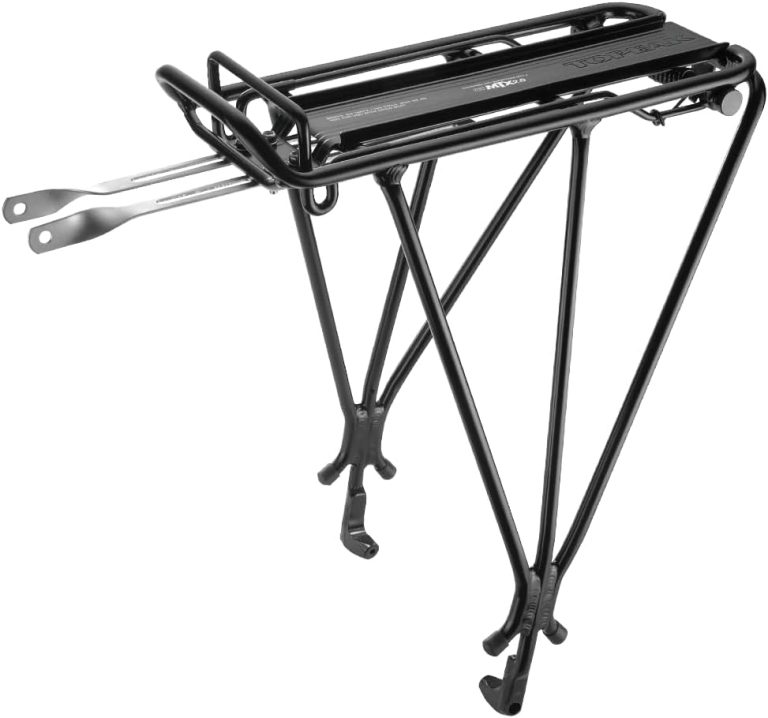
- Retractable Aluminum Alloy Bike Rear Rack — he bicycle carrier rack is made of high quality hard Aluminum Alloy, durable and sturdy, which can bear more weight and will not be easily damaged. And it is equipped with stainless steel screws, which can help you ride freely in rainy or humid environments and keep your bicycle dryer and cleaner.
- Load Capacity and Unique Design– The bike luggage rack supports max 25kg/55lbs, which helps you easily transport your luggage, used with panniers, backpacks, baskets, etc. The weight can be increased according to the strength of the seatpost. In addition, the slightly raised design of tail and the front flap helps to keep the cargo in place and prevent it from falling off. And the black color is more resistant to dirt.
- Simple Installation and Adjustable Shelf — Easy to replace and install on the sitting post of the bike rack. Easy to install with the included rubber pad and L wrench.Allow you to transport your cargo with ease and efficiency, perfect for use with panniers, backpacks, baskets, etc. Attached to the bicycle seatpost, the adjustable mounting rod extends backward/forward according to your needs.It fit different bikes, retracted for easy storage.
- Fit Almost Bikes – This rear rack is perfect for a long cycling trip and excursions to embracing enough daily necessities. Suitable for most bicycles, Such as road bike, mountain bike, fat bike, etc. Shelf length 34 cm/13.4 inch, width 12 cm/4.7 inch , suitable for most bicycles that seat rod caliber is under 32mm/1.3 inch. The mounting bracket fits for seat tube diameters of 27.2-31.8 mm/1.1-1.3 inch.
- Max 25kg/55lbs– Package Included: 1* Bike Cargo Rack, 8* Rubber Pads, 1* 5mmAllen Key, 1* 6mmWrench.
Last update on 2026-09-17 / Affiliate links / Images from Amazon Product Advertising API
Unveil the secrets to selecting the ideal rear bike rack that fits your tire and axle with this definitive guide.
Whether you’re a seasoned cyclist or just starting, choosing the right rack is crucial for your biking adventures.
Look into key factors like compatibility, capacity, and installation ease to make an informed decision.
Discover how different designs cater to diverse needs, from commuting essentials to long-haul touring gear.
Explore top brands and user reviews to pinpoint the perfect rear bike rack that effortlessly suits your style and requirements.
Understanding Different Types of Bike Racks and Bags
Types of Bike Racks
Bike racks come in various types, each serving a unique purpose.
Rear racks attach to the back of your bike frame and are ideal for carrying loads on longer rides.
Roof racks, as the name suggests, are installed on the roof of a vehicle and can hold multiple bikes securely during transportation.
Trunk-mounted racks are versatile options that fit on most vehicles’ trunks or hatchbacks, providing an easy solution for short trips.
When considering which type to choose, think about your specific needs.
If you often travel long distances with your bike, a rear rack might be the best option due to its stability and weight-bearing capacity.
On the other hand, if you frequently drive different vehicles or need quick installation/removal, a trunk-mounted rack could be more suitable.
- Pros:
- Rear racks offer excellent stability.
- Trunk-mounted racks provide versatility for various vehicles.
- Cons:
- Roof racks may require additional lifting effort.
- Trunk-mounted racks might limit access to the trunk.
Styles of Bike Bags
Bike bags are crucial in transporting essentials and rack installation while cycling.
Panniers are large bags attached to either side of rear bike racks and offer ample storage space for groceries or camping gear.
Saddlebags, also known as seat packs, conveniently sit under your saddle without hindering leg movement but have limited capacity compared to panniers.
Lastly, handlebar bags attach to the front handlebars and are perfect for storing items you need quick access to during rides.
The choice between these styles depends on how much gear you typically carry when biking.
For instance, if you enjoy long-distance touring or commuting with heavy loads like laptops or gym clothes, panniers would suit your needs best due to their spacious design.
- Pros:
- Panniers provide generous storage space.
- Handlebar bags allow easy access while riding.
- Cons:
- Saddlebags have limited capacity compared to panniers.
- Handlebar bags may affect steering control if overloaded.
Factors to Consider When Choosing a Rear Bike Rack
Weight Capacity
When selecting a rear bike rack, it’s crucial to consider its weight capacity.
Ensure the rack can support the weight of your belongings, such as panniers or bags. Exceeding the weight limit may lead to instability and potential accidents.
For example, if you carry heavy items like groceries or camping gear, opt for a rear bike rack with a higher weight capacity.
Compatibility with Bike’s Frame Design
The compatibility of the rear bike rack with your bike’s frame design is essential for proper installation and stability.
Different bikes have varying frame shapes and sizes, so ensuring the rack fits securely without interfering with other components is key.
For instance, some racks are specifically designed for road bikes with narrow frames, while others are more suitable for mountain bikes with wider frames.
Material and Durability
Considering the material and durability of the rear bike rack is vital to ensure it can withstand different weather conditions and usage scenarios.
Look for racks made from sturdy materials like aluminum or steel that offer strength and lightweight properties.
Opt for racks with corrosion-resistant coatings to prolong their lifespan in various weather conditions.
Exploring the Uses of Rear Bike Racks
Versatility for Different Activities
Rear bike racks are crucial in various biking activities such as commuting, touring, and bikepacking.
They offer a practical solution for transporting items like groceries, work essentials, or camping gear while riding your bicycle.
This convenience makes them an essential accessory for cyclists carrying belongings on their bikes.
Rear racks come in handy when you want to attach panniers or other bags to increase your storage space during rides.
Imagine going on a weekend adventure with all your camping gear securely fastened to the back of your bike using a rear rack.
Customizing and expanding storage options is one of the key advantages of rear bike racks.
Enhancing Storage Capacity
One significant advantage of utilizing rear bike racks is that they allow you to carry more items without compromising comfort or safety while cycling.
With the additional attachment points provided by these racks, you can easily secure bungee cords or straps to hold bulkier loads securely in place.
This means you can transport larger items such as tents, sleeping bags, or even sports equipment effortlessly.
Moreover, if you prefer having weight distributed evenly across both wheels for better balance while riding, mounting cargo on a rear rack proves beneficial compared to front-mounted options.
Attaching cargo directly over the rear wheel helps maintain stability and control when navigating different terrains or road conditions.
This ensures smoother rides regardless of what you’re carrying on your bicycle.
- WATER RESISTANT & STURDY: The bicycle rack bag is made of PU leather & polyester, which is durable, water repellent and easy to clean. It even comes with rain cover that completely helps protect the trunk and the stuffs in it from dirt, sand, water, rain and snow.
- 7L CAPATITY: Our bike carrier bag includes a main compartment, a extra top zippered pocket and adjustable elastic cord, which helps keep your riding essentials well organized. Dimension of 12 x 6.7 x 5.5inch (L x W x H), 7l capacity enough to contain wallet, phones, power bank, small speaker, towels, T-shirt,food, drinks,bike locks , small tools, water bottles, sunglasses etc.
- REFLECTIVE STRIPS: The reflective strips increase visibility at night, together with the rear belt for taillight(not included), which make you riding more safe.
- EASY TO INSTALL: This trunk attaches easily to the rear bike/e-bike rack with 2 velcro straps; Interior equipped with thin PE foam for better protecting the gears in the bag. It could collapse flat when you don’t use it.
- YOUR GREAT BIKING BUDDY: This bag features portable and lightweight. No matter what kind of occasion, such as picnics, backpacking, commuting and hiking, it will be your good partner. If you have any problem with it, don’t hesitate to contact us, we’re always at your service.
Last update on 2026-09-17 / Affiliate links / Images from Amazon Product Advertising API
Key Features to Look for in a Bike Bag
Waterproof Materials
When selecting a rear bike rack, prioritize bags made from waterproof or water-resistant materials.
These materials shield your belongings from rain, ensuring they stay dry even during wet rides.
For instance, the Armadillo Dry Bag Protector provides excellent protection against moisture for your camping gear.
Multiple Compartments
Opt for bags with multiple compartments or pockets to keep your items organized and easily accessible while on the go.
Different sections allow you to efficiently separate items such as tools, snacks, and personal belongings.
Planet Bike offers trunk bags with various compartments suitable for storing different types of gear.
Reflective Elements
Choose a bag with reflective elements, enhancing visibility and safety when riding in low-light conditions.
These reflective components make you more noticeable to other road users, reducing the risk of accidents.
The Aeropack is an example of a bag designed with reflective strips to increase visibility at night.
Installation and Compatibility of Rear Bike Racks
Checking Compatibility
When installing rear bike racks, it’s crucial to ensure they are compatible with your bike’s frame size and mounting points.
Some racks may require specific tools or adapters for installation, so it’s essential to check the requirements beforehand.
For instance, if you have a bike with 700c wheels, ensure the rack has enough tire clearance.
It is vital to consider whether the rear rack mounts properly on your bicycle without interfering with cables or brakes.
Double-check that the current version of the rear bike rack fits securely on your specific type of bicycle frame before proceeding with installation.
Proper Installation Steps
Follow the manufacturer’s instructions meticulously to install a rear bike rack correctly.
Start by identifying all necessary components and tools required for assembly. Begin by attaching mounting brackets to designated points on the frame using appropriate hardware provided in the kit.
Next, secure any additional parts, such as struts or support bars, according to the instructions provided.
Ensure all bolts are tightened securely, but avoid over-tightening them, as this could damage your bike frame or rack components.
- Check compatibility with your bike.
- Gather the necessary tools.
- Attach mounting brackets securely.
- Install additional support parts carefully.
- Tighten bolts appropriately.
Security Features and Ease of Use for Rear Bike Racks with pannier bags, cargo cages, and trunk bags.
Locking Mechanisms
When selecting rear bike racks, prioritize models with built-in locking mechanisms to keep your bike safe.
These locks provide an extra layer of security, preventing theft when you’re away from your bike.
By securing the frame or wheels, these mechanisms deter potential thieves and offer peace of mind.
Opting for a rack with a lock ensures that your bike remains protected even when you need to leave it unattended briefly.
This feature is especially crucial in urban areas or during stops on long rides where security may be a concern.
- Pros:
- Enhanced security for your bike
- Peace of mind when leaving the bike unattended
- Cons:
- Additional weight due to the integrated locking system
Quick-Release Mechanisms
Rear bike racks equipped with quick-release mechanisms simplify the process of attaching and detaching the rack as needed.
This feature allows for swift installation and removal without requiring tools, offering convenience and efficiency.
Whether loading up your gear before a ride or removing the rack for storage, quick-release systems streamline these tasks.
- Pros:
- Easy attachment and detachment without tools
- Time-saving convenience
- Cons:
- Potential risk if not properly secured
Adjustable Features
Consider rear bike racks with adjustable features that enable customization based on personal preferences.
Adjusting height, angle, or position provides flexibility in accommodating various bikes or cargo loads effectively.
Tailoring the rack’s setup to suit individual needs ensures optimal functionality and comfort during rides.
- Pros:
- Customizable positioning for different bikes
- Versatility in accommodating various cargo sizes
- Cons:
- Requires time to find ideal adjustments
Price Range Considerations for Rear Bike Racks
Budget Option
When looking at rear bike racks, it’s crucial to consider the price range.
These racks vary greatly in cost, so understanding your budget is essential.
Higher-priced options often provide enhanced durability, stability, and extra features.
On the other hand, budget-friendly choices still deliver reliable performance.
Affordable rear bike racks can offer a good balance between quality and price.
For example, some lower-cost models may lack certain advanced features but excel in basic functionality like securely holding your bikes during transportation.
It’s important to weigh the benefits of higher-priced racks against what you truly need from a rack.
Range
The price range for rear bike racks ranges from as low as $30 for simple designs to over $500 for premium models with innovative technology and materials.
When considering this wide range, consider how frequently you’ll use the rack and what type of bikes you’ll be transporting.
- Pros:
- Affordable options are available.
- Wide variety catering to different budgets.
- Cons:
- Cheaper models may lack advanced features.
- High-end options can be costly.
Benefits of Lightweight Rear Bike Racks for Bikepacking
Easier Riding Experience
Lightweight rear bike racks are designed to lessen the overall weight of your bike.
This reduction can significantly improve your riding experience by making it less strenuous and enjoyable.
With a lighter load, you’ll find it easier to navigate various terrains without feeling weighed down.
Carrying essential gear is crucial for bikepacking adventures, but extra packing space can quickly add up in terms of weight.
Opting for a lightweight rear bike rack allows you to bring all the necessary equipment without compromising comfort or performance.
Whether you’re tackling rugged trails or cruising along paved roads, the reduced weight will make each pedal stroke feel smoother and less taxing.
Ideal for Long-Distance Trips
Choosing a lightweight rear bike rack is paramount for cyclists embarking on long-distance journeys like bikepacking trips.
The benefits extend beyond just reducing physical strain and contribute to overall endurance and stamina during extended rides.
By selecting a lightweight option, riders can maintain momentum over extended periods without succumbing to fatigue.
- Pros:
- Enhanced riding experience with reduced weight.
- Improved maneuverability and control on different terrains.
- Enables carrying essential gear without excessive bulk.
- Cons:
- Some ultra-lightweight models may have lower weight capacities.
Installation Guide: How to Install a Rear Bike Rack
Removing Interfering Accessories
To start installing your rear bike rack, remove any accessories or components that might get in the way. This could include saddlebags, lights, or reflectors attached to your bike.
Ensuring an obstruction-free area is crucial for a smooth process.
By taking this step first, you pave the way for easy access and attachment of the rear bike rack.
Attaching the Rack
Attach the rear bike rack to the designated mounting points on your bike’s frame using the provided hardware. These mounting points are typically located near the seat stays and on the rear dropouts.
Securely fasten all bolts and screws according to the manufacturer’s instructions, making sure they are correctly tightened but not over-tightened.
Double-check these connections before use for safety purposes.
Ensuring Secure Fastening
After attaching the rear bike rack, ensure it is securely fastened by giving it a gentle shake or tug. The rack should feel stable and not wobble when pressure is applied.
Double-check all connections again before placing any weight on the rack, such as panniers or bags. This final inspection ensures that everything is properly installed and ready for use.
Summary
Whether it’s for daily commuting, long-distance touring, or bikepacking adventures, selecting the right rear bike rack and bag is crucial for a seamless and enjoyable cycling experience.
Remember to prioritize durability, compatibility, security features, and ease of use when choosing your ideal rear bike rack setup.

- BUILT TO LAST: The Kryptonite Evolution Mini‑7 U‑Lock is constructed with a 13mm hardened Max‑Performance steel shackle to help resist cutting and leverage attacks, while a durable vinyl‑coated protective sleeve prevents scratches to your bike’s frame and preserves its finish.
- DOUBLE-DEADBOLT DESIGN: Locks the shackle on both sides of the crossbar for enhanced resistance against twisting and pulling. Certified by Sold Secure Gold, it also includes a high‑security disc‑style cylinder to resist picking and drilling
- VERSATILE SECURITY WITH 4‑FT CABLE: Includes a 4‑ft (120 cm) double‑loop security cable ideal for securing your front wheel, helmet, or accessories. Together with the U‑lock, it is perfect for securing bicycles and e‑bikes at work, school, or around town
- COMPACT, COMMUTER-FRIENDLY SIZE: This U-lock features interior locking dimensions of 3.25” x 7” (8.3cm x 17.8cm) and a total lock weight of 3.55 lbs (1.61 kg), providing a tight fit around bike racks to deter leverage attacks. Weather-treated components help protect against rust and outdoor exposure for reliable everyday use
- EASY MOUNTING BRACKET INCLUDED: Comes with a secure FlexFrame‑U bracket that attaches directly to your bike frame for hassle‑free transport—allowing you to carry the lock easily with no backpack or lock bag required
Last update on 2026-09-17 / Affiliate links / Images from Amazon Product Advertising API
Frequently Asked Questions
FAQ
Can rear bike racks accommodate different types of bikes?
Yes, rear bike racks come in various designs to fit different types of bikes, including road bikes, mountain bikes, and hybrid bikes.
It’s essential to check the compatibility of the rack with your specific bike model before making a purchase.
Are security features important when choosing a rear bike rack?
Security features are crucial for protecting your bike from theft. Look for racks with built-in locking mechanisms or options to attach a separate lock.
Ensure the design lets you secure the rack and the bike frame effectively.
What are some key benefits of lightweight rear bike racks, frame bags, and cargo cages for bikepacking?
Lightweight rear bike racks are ideal for long-distance cycling trips as they minimize added weight without compromising durability.
They offer ease of handling and contribute to a smoother riding experience, especially when navigating challenging terrain during bikepacking adventures.
How do I ensure proper installation and compatibility of a rear bike rack with front racks, Seatpost, tire clearance, and fit?
Follow the manufacturer’s guidelines provided with the rack carefully during installation. Check if it is compatible with your bicycle model by reviewing mounting points and weight capacity.
Ensuring correct installation will enhance safety and performance while using the rack.
Is price range an important factor to consider when selecting a rear bike rack?
Price range considerations are crucial but should not be prioritized over quality and functionality.
Evaluate factors like material durability, weight capacity, security features, ease of use, and compatibility before comparing prices across brands.
Invest in a reliable rear bike rack that meets your biking needs effectively.